
A limo answering service is the difference between a Friday-night booking confirmed in two minutes and a voicemail the caller will never return to. In 2026, the global limousine services market is projected to reach USD 2,530 million, climbing toward USD 4,586.6 million by 2033, according to Congruence Market Insights. As that market grows, so does the competition for every inbound call. Digital Minds BPO, a Philippine-based business process outsourcing company with over 15 years of experience serving luxury transportation clients, has seen firsthand what separates limo companies that scale from those that stall: how they handle the phone.
This guide covers what happens when your limo company misses a call, what that actually costs, and what a professional 24/7 limousine call center does differently.
What Is a Limo Answering Service?
A limo answering service is a dedicated call handling solution built specifically for luxury transportation businesses. Trained agents answer inbound calls around the clock, take reservations, coordinate dispatch, and manage customer inquiries, all using your company’s guidelines, software, and pricing. Unlike a generic message-taking service, a limo-specific answering service captures and confirms bookings in real time, the same way an in-house receptionist would.
Livery service differs from typical car rental in one critical way: every client expects a scheduled, high-touch, chauffeur-driven experience with no surprises. That expectation starts the moment they pick up the phone. If no one answers, the expectation is already broken, and most callers won’t give you a second chance.
Common Problems That Send Limo Calls to Voicemail
Most missed calls in the limo industry aren’t random. They follow predictable patterns. The causes fall into three categories.
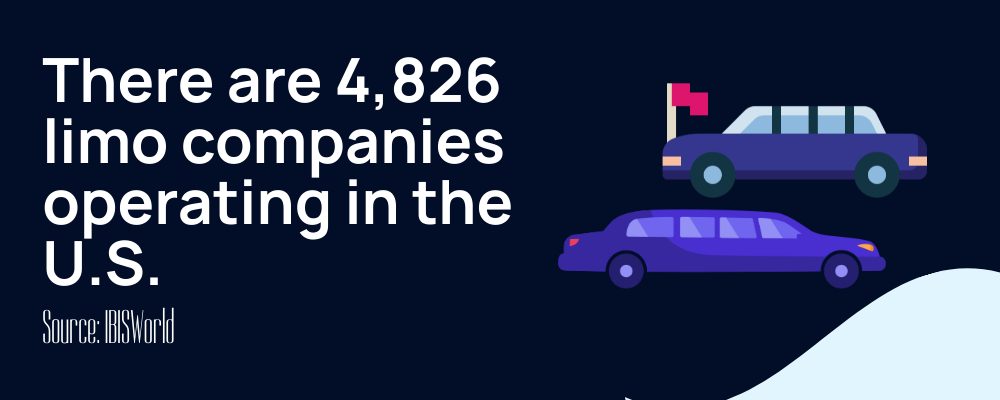
Note: The U.S. limousine and town car services industry is much larger when measured by IBISWorld’s current 2025 data, at approximately 189,000 registered businesses. The 4,826 figure above represents a narrower slice of traditional stretch-limo-only operators.
Operational and logistical problems
- Manual dispatching errors from a “pen and paper” approach leave staff unable to monitor incoming calls at the same time.
- No dedicated dispatcher means the owner or driver often doubles as the receptionist, with predictable results.
- No real-time tracking results in poor driver-to-office communication, creating gaps when calls come in during active runs.
- Inefficient routing leads to service delays and drivers who can’t get back to base in time to take the next call.
Technology and integration gaps
- Outdated reservation systems can’t provide the instant confirmation clients expect when booking luxury transport.
- Many companies struggle to connect newer dispatch software with older billing, GPS, or payroll platforms.
- Staff resistance to automated software keeps operators relying on methods that create call-handling bottlenecks.
Customer service and safety
- Inability to respond promptly erodes the trust that high-end transport clients expect from the first interaction.
- A lack of immediate connection affects customer confidence, especially for VIP transfers and time-sensitive airport runs.
- High-priority trips, such as airport pickups, wedding day logistics, and corporate travel, require precise planning that breaks down without proper call handling.
The Call You Didn’t Answer Just Booked Your Competitor
Picture a busy Friday night. A client calls for urgent car service. No one answers. The call goes to voicemail. What happens next is exactly what the data predicts.
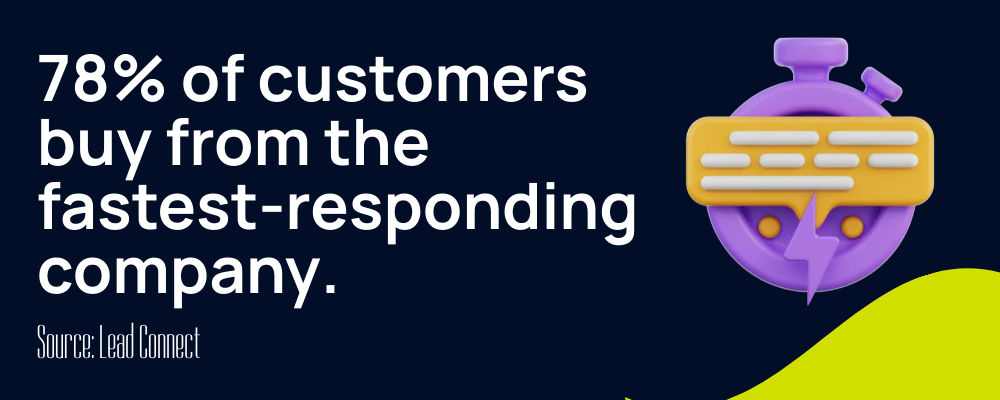
Unanswered calls are more common than most owners think. When 411 Locals tracked 85 small businesses for 30 days, only 37.8% of calls reached a live person. The rest went to voicemail (37.8%) or got no response at all (24.3%) (411 Locals, 2016). Every one of those calls is a chance for a competitor to answer first. The MIT/InsideSales.com Lead Response Management Study found that 78% of customers buy from the first company to respond. In luxury transportation, where alternatives are one Google search away, being the second company to answer means you don’t get the booking.
For a VIP client expecting white-glove service, the unanswered call isn’t just a minor inconvenience. It’s proof that your company doesn’t treat their time as a priority. Many won’t try again. Some will leave a review about it instead.
What One Missed Limo Booking Actually Costs
The financial impact of a missed call is almost never limited to one booking. It compounds across the customer lifetime, across your ad spend, and across your Google ranking.
Single booking loss
Every unanswered call in limo is a real dollar amount walking out the door. A full-night limo rental for prom season typically runs $425 to $950. Hourly rentals go from $70 to $150. Wedding packages range from $270 to $450 for a 3-hour rental and up to $750 for five hours. Airport transfers, one of the highest-demand use cases, often start at $400 for premium options. These aren’t small amounts. And that’s just the first booking.
Lifetime customer loss
Consider your frequent airport client. Monthly trips, reliable bookings, no negotiation on price. At $400 per run, that’s $4,800 per year. If they’re on an annual membership or loyalty package, you’re looking at $3,000 to $3,500 per year from one customer alone.
One missed call to that client, at the wrong moment, on the wrong night, can end that relationship. Not because they’re difficult. Because limo clients have options, and your competitor answered on the second ring. Inbound call center services exist precisely to close this gap, ensuring no repeat customer ever reaches voicemail.
Wasted Google Ads spend and LSA penalty
If you’re running Google Ads or Local Services Ads (LSA) for your limo company, missed calls don’t just cost you the booking. They cost you the click you already paid for.
With Google LSA, you pay per lead, not per click. A “lead” is a call, message, or booking request. If that call goes unanswered, you’ve paid for a lead you lost. Worse: industry practitioners report that Google’s LSA algorithm penalizes businesses with high missed-call rates by dropping their ad ranking for up to 90 days. You lose the booking, you lose the ad spend, and then your ads show up lower for the next 90 days while your competitor’s ads rise. One pattern of missed calls during a peak weekend can affect your ad visibility through an entire season.
This is a cost most limo operators never calculate. Their spreadsheet shows “cost per lead” but doesn’t factor in what happens to ad performance when those leads go unanswered.
The Missed Call Cost Calculator
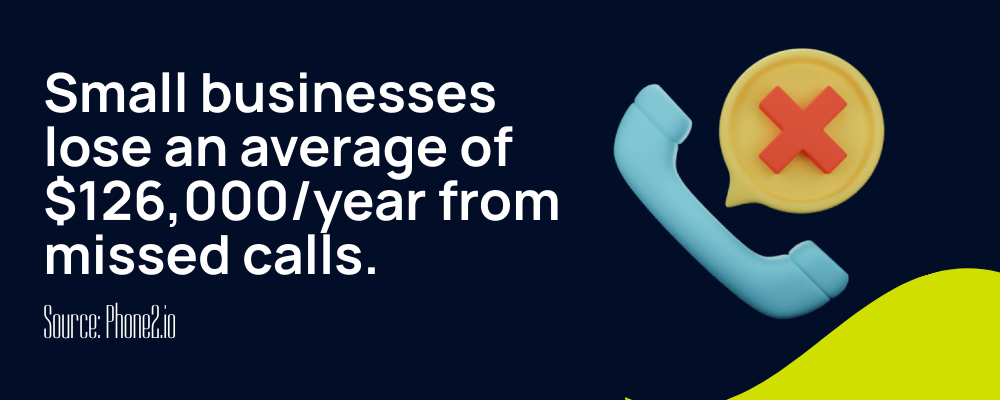
Industry benchmarks put the annual cost of missed calls for small businesses in the six figures, but that’s a vendor-cited aggregate figure. Here’s how to calculate what your limo company is actually losing, using real data.
Step 1: Count your monthly missed calls.
For this example: 30 missed calls per month. (Check your phone system or answering service logs to find your actual number.)
Step 2: Estimate how many callers never come back.
No reliable study measures this for limo companies, so use your own figure if you track it. This example assumes half: 30 × 0.5 = 15 permanently lost callers per month.
Step 3: Apply the live-call conversion rate.
Travel and hospitality data shows 43% of live-connected callers convert on the call itself (Invoca, 2025). Applied to the lost callers: 15 × 0.43 = approximately 6 lost bookings per month.
Step 4: Multiply by your average booking value.
At $200 per booking (a conservative estimate for a short airport run): 6 × $200 = $1,200 per month in direct lost booking revenue.
Step 5: Annualize.
$1,200 × 12 = $14,400 per year in direct lost booking revenue, from just 30 missed calls per month.
Step 6: Add the hidden costs.
This figure doesn’t include: Google Ads clicks you paid for before the call went to voicemail; LSA ranking penalties from your missed-call rate; negative reviews left by callers who couldn’t reach you; or the lifetime value of VIP clients who moved to a competitor permanently.
Run this with your real numbers. Even at 10 missed calls per month with a $200 average booking value, the direct revenue loss is over $5,000 per year, before the hidden costs. The calculator works at any scale. Most limo operators are surprised by how quickly a modest missed-call rate turns into a meaningful revenue gap.
When Are Limo Companies Most Vulnerable to Missed Calls?
For startup operators, the owner is often the driver. That’s a real constraint, and it creates predictable blind spots. Even established companies with dedicated staff run into trouble when volume spikes.
Peak vulnerability windows: after-hours calls, Friday and Saturday evenings, holiday weekends, prom season, and wedding season. During these periods, call volume increases sharply, exactly when your staff is most stretched. An in-house receptionist can only handle one call at a time. A virtual receptionist service scales with volume, so your busiest nights don’t become your most expensive missed-call events.
The 11pm Wednesday call is its own problem. That’s the quiet booking from the executive who needs a 5am airport pickup. No staff on duty. Owner is behind the wheel. The call hits voicemail. By morning, the client has booked with someone else, and you never knew you lost the opportunity.
The Voicemail Fallacy: Why “Leave a Message” Doesn’t Save the Booking
Voicemail was designed for a world where callers were patient and options were limited. That world no longer exists, especially in luxury transportation.
The data is direct: 80% of callers never leave a voicemail message (Destination CRM). And when companies do call back from an unknown number, 67% of Americans don’t answer (Pew Research Center, December 2020). A separate TNS 2022 study via BusinessWire found that 75% of Americans never answer calls from unknown numbers at all. Your callback goes straight to their voicemail. The loop closes on nothing.
The Invoca 2025 data on live-call connection makes the comparison even sharper: the live-answer connect rate in travel and hospitality reaches 69%. When someone reaches a real person on the first call, nearly 7 in 10 stay on the line and engage. Voicemail captures almost none of that behavior.
For limo companies that advertise round-the-clock availability, an unanswered call at 9pm is a broken promise. It’s not a voicemail problem. It’s a trust problem.
Missed Calls Become Missed Reviews (and Bad Ones)
A caller who can’t reach you may leave a 1-star Google review before ever becoming a customer. That sounds unfair. From the caller’s perspective, it isn’t. They called a business that advertised availability and got silence.
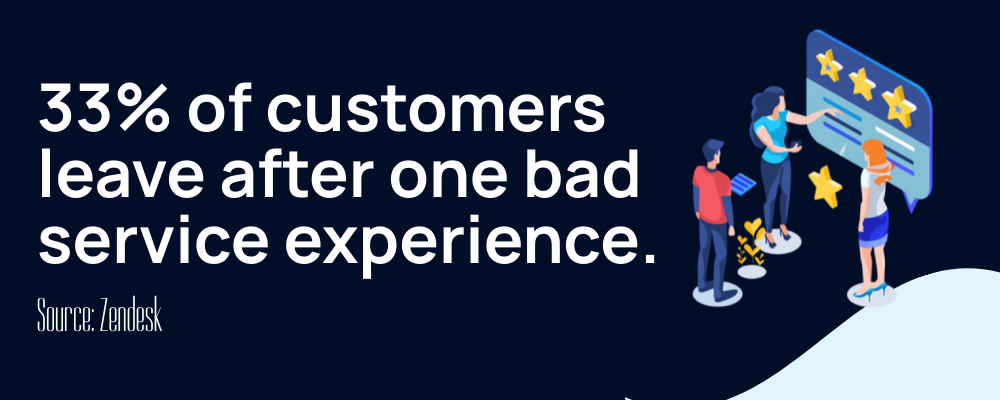
The benchmark shown above reflects earlier Zendesk data. Current figures are more severe: more than 50% of consumers will switch to a competitor after just one bad experience, according to the Zendesk CX Trends Report. For luxury transport, where word of mouth and referrals drive a significant share of new business, a pattern of unanswered calls becomes visible in your review score before you notice it in your bookings.
Two or three negative reviews citing “couldn’t reach anyone” are enough to make a prospective VIP client skip your listing entirely. The review damage outlasts the individual missed call, and it compounds over time.
Generic Answering Service vs. Limo-Specific Call Center: What Actually Breaks
Deciding between a generic answering service and a limo-focused call center comes down to one question: do you need someone to take a message, or someone to take a booking? Those are very different jobs, and the gap between them shows up clearly when you compare them side by side.
A generic answering service (also described as virtual receptionist services for general business use) handles overflow and after-hours calls and relays information. It doesn’t know the difference between a stretch limo and a sedan, doesn’t have access to your pricing matrix, and can’t coordinate a farm-out if your vehicle is unavailable. A limo-specific call center operates as a true extension of your business: booking, dispatch, software integration, and all.
| Factor | Generic Answering Service | Limo-Specific Call Center |
|---|---|---|
| Booking capture | Takes messages | Takes reservations end-to-end |
| Software integration | Phone only | Limo Anywhere, Hudson, LimoWiz, and similar platforms |
| Agent knowledge | Generalist | Knows vehicles, farm-out, chauffeur coordination |
| Quote accuracy | Transcribes the caller’s guess | Pulls rates from your pricing matrix |
| Airport coordination | Logs arrival time | Tracks flight status, adjusts pickup automatically |
| After-hours action | Returns a call next morning | Dispatches a driver tonight |
| Outcome | Caller contacts a competitor | Booking confirmed in minutes |
The difference isn’t price. Generic services are often cheaper per month. The cost comparison shifts entirely when you factor in the bookings a generic service can’t capture, because the agent didn’t know your rates, couldn’t access your dispatch system, and had no authority to confirm the reservation.
What a Professional Limo Call Center Actually Does
Having a reliable partner like Digital Minds BPO for limo dispatch answering is about more than coverage. It’s about having agents who understand the mechanics of luxury transportation and can represent your company at the same standard your clients expect from your drivers.
24/7 inbound call answering
A professional inbound call center handles every call 24 hours a day, 365 days a year. Agents work in shifts across time zones, so peak-hour volume, late-night requests, and early-morning airport bookings are all covered without relying on a single in-house receptionist. When the owner is behind the wheel, the phone is still answered.
Reservation processing
This means collecting client information, confirming vehicle availability, scheduling drivers, processing payments, and sending automatic booking confirmations. For high-stakes events such as weddings, airport transfers, and corporate travel, reservation accuracy matters as much as the ride itself. Agents trained in luxury transport handle the details correctly the first time.
Dispatch coordination
Dispatch coordination is the operational core of limo logistics: driver assignment, route management, real-time communication, and making sure the right vehicle arrives at the right place on time. When you outsource dispatch services to a dedicated team, those logistics run continuously, even when your in-house staff is off the clock.
Limo Anywhere integration
Limo Anywhere connects cloud transportation management with tools like QuickBooks and Zapier for faster bookings, billing, and driver coordination. A limo call center with proper platform access can process reservations directly in your system, automate driver wake-up calls, and update records in real time. No manual handoffs, no transcription errors.
Manage overflow during peak periods
Holidays, prom weekends, major local events: these create call volume spikes that overwhelm in-house staff. A limo call center absorbs that overflow without adding headcount on your side. Volume goes up; your call answer rate stays consistent. No bookings slip through because every available line was occupied.
Quality-monitored calls
Every call is recorded, reviewed against quality scorecards, and graded for accuracy and professionalism. This means your brand standard is applied consistently across every interaction, not just when your best receptionist is on shift. Ongoing call monitoring catches issues early and keeps agent performance at the level your VIP clients expect.
What 15 Years Has Taught Us About Limo Answering Services
Digital Minds BPO has run call center operations for clients across transportation, hospitality, healthcare, and retail for over 15 years. Limo and livery clients share a pattern we see consistently: the cost of one missed call is almost never just one missed call.
It’s the review left by the caller who reached voicemail. It’s the referral that never happened because a VIP moved to a competitor’s app. It’s the Google LSA ranking that dropped after a bad-call-rate week during prom season. The financial damage is real, and most operators only see it in aggregate, as a slow decline in new bookings or a review score that inches downward, rather than tracing it back to specific unanswered calls.
The limo clients who scale fastest aren’t always the ones with the biggest fleets. They treat every inbound call as revenue already on the line. They staff the phone like it’s their highest-value asset, because the data says it is: a 69% live-answer connect rate in travel hospitality means a real person answering the phone converts at nearly 7 in 10 attempts. That’s a closing rate most sales teams would take for their best-performing channel.
The 11pm Wednesday call is the one that defines you. That’s the booking you never knew you lost, until you do the math on your missed-call volume and realize how many of those calls happened outside business hours. Our 94% client retention rate, across every vertical we serve, comes from one consistent principle: the phone gets answered, every time, by someone who knows what they’re doing. That standard doesn’t have an off switch.
Ready to Stop Losing Bookings?
You’ve seen what one missed call costs. Run the numbers for your own company using the calculator above, and the case for a dedicated limo answering service becomes clear. Digital Minds BPO handles your 24/7 answering, dispatch coordination, and Limo Anywhere integration with experienced agents who know the difference between a stretch and a sedan, and who treat every caller as the VIP client they might become.
Frequently Asked Questions About Limo Answering Services
1. What happens if a limo company doesn’t answer the phone?
Every missed call is a missed booking opportunity, and missed calls are common. When 411 Locals tracked 85 small businesses for 30 days, only 37.8% of calls were answered by a live person (2016). In luxury transportation, where clients expect immediate, high-touch service, an unanswered call often ends the relationship before it begins, and may result in a negative review even from someone who was never a customer.
2. How much does a missed call cost a limo business?
A single missed booking can cost $200 to $950 depending on the service type. Airport runs, wedding packages, and prom night rentals all carry different rates. But the real cost compounds: a VIP client with monthly bookings represents $3,000 to $4,800 per year in direct revenue. When you apply the Missed Call Cost Calculator (30 missed calls per month, half of those callers never coming back, 43% live-call conversion rate), the direct revenue loss reaches $14,400 per year, before factoring in Google Ads waste and review damage.
3. Why do limousine companies use answering services?
Limousine companies use answering services to maintain 24/7 availability without staffing an in-house receptionist around the clock. Limo-specific services go further: they handle reservations end-to-end, coordinate dispatch, integrate with software like Limo Anywhere, and manage overflow during peak periods, all while maintaining the professional standard that luxury transport clients expect.
4. What is a limo answering service and how does it work?
A limo answering service is a round-the-clock call handling solution built for luxury transportation businesses. Trained agents answer inbound calls using your company’s guidelines, take reservations directly in your booking system, manage customer inquiries, and coordinate with dispatch. Incoming calls are routed to agents who are familiar with vehicle types, pricing structures, and the coordination requirements of chauffeur-driven service, so callers get a professional, knowledgeable response every time.
5. What’s the difference between a limo answering service and a limo call center?
A limo answering service typically captures messages and basic details when you’re unavailable. A limo call center provides complete, ongoing support: managing reservations, handling inbound and outbound calls, integrating with dispatch software, and coordinating operations across shifts. The call center model is a business extension; the answering service is a message-taking backup. For companies serious about booking capture, the call center model is the more reliable solution.
6. How much does a limousine answering service cost?
Basic answering services typically run $100 to $500 per month depending on call volume. Full-service limo call centers (24/7 coverage, reservation processing, dispatch coordination, software integration) generally range from $350 to over $600 monthly for standard volume. Pricing structures vary: flat monthly fees, per-call charges, or monthly subscriptions. When you compare the monthly cost against the revenue value of even a handful of captured bookings, the return on investment for a limo-specific service becomes straightforward to justify.
7. Can a limo call center integrate with Limo Anywhere?
Yes. A limo-specific call center with proper platform access can process reservations directly in Limo Anywhere, automate driver wake-up calls, update dispatch records in real time, and sync with connected tools like QuickBooks and Zapier. Generic answering services typically cannot do this, since they operate by phone only, without access to your management software.
8. Do customers call back if their first call goes unanswered?
Many don’t, though no reliable study puts an exact figure on it. And even when businesses attempt a callback, 67% of Americans don’t answer calls from numbers they don’t recognize (Pew Research Center, December 2020). The window to capture a limo booking is the first call. Once it goes to voicemail, the probability of recovery drops sharply, and in most cases, the caller has already moved on to a competitor.
9. Do I need a 24/7 answering service for my limo business?
If you take after-hours bookings, serve airport clients, or operate on weekends and holidays, yes. The highest-value calls in the limo business often come outside standard business hours: the late-night request, the early-morning airport run, the Saturday wedding inquiry. A 24/7 answering service ensures those calls reach a live agent who can confirm the booking on the spot, rather than a voicemail the caller won’t return to.
10. How quickly can a limo answering service be set up?
Basic answering service setups can go live in one to seven days. More fully integrated solutions (those with dispatch coordination, Limo Anywhere access, custom booking scripts, and multi-line handling) typically take three to five weeks to configure properly. The setup timeline depends on the complexity of your operations and how much software integration is required. Most reputable limo call center providers will give you a clear timeline during the scoping conversation.

Charvel Rebagay is the CEO and Founder of Digital Minds BPO, a Philippines-based outsourcing company he established in 2010. Based in Naga City, he works directly with clients and teams daily to ensure service quality across every engagement. With over 15 years of experience building and managing dedicated teams for businesses worldwide, Charvel has helped hundreds of companies scale their operations through skilled Filipino professionals. Under his leadership, Digital Minds BPO operates 3 dedicated facilities with a 94% client retention rate, serving Fortune 500 clients including P&G and Petron.