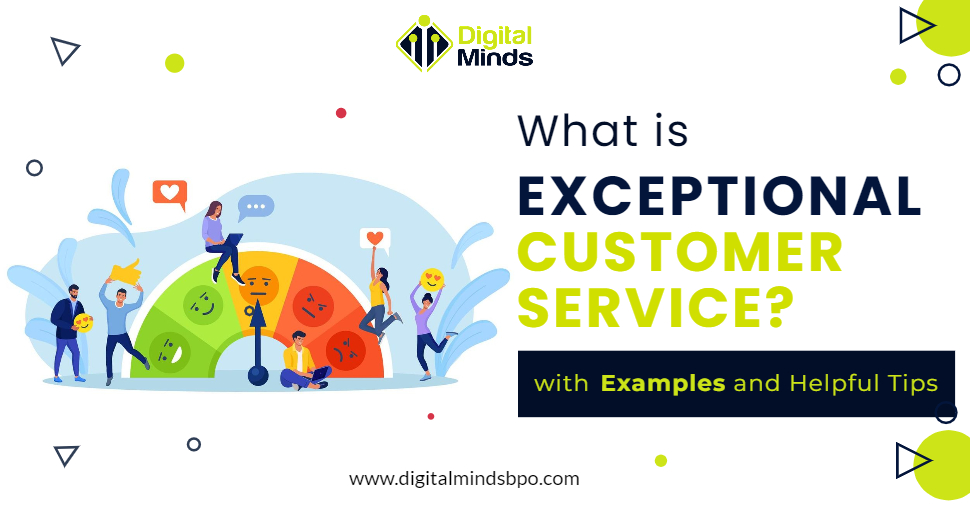
Exceptional customer service means consistently exceeding customer expectations through responsive communication, genuine empathy, and swift, effective problem resolution. It’s the standard a company maintains across every interaction, every agent, and every channel, day after day, not a single impressive gesture pulled out for show.
Businesses that deliver this level of service build loyalty competitors struggle to break. Research from Bain and Company shows that increasing customer retention by just 5% can increase profits by 25 to 95%. That’s the financial case. The human case is simpler: customers remember how you made them feel, and they tell others.
This guide covers what exceptional customer service actually looks like, the framework behind it, real-world examples, and practical steps to build a team that delivers it consistently.
What Is Exceptional Customer Service?
Exceptional customer service is the kind of support that goes beyond solving the problem. It makes the customer feel heard, respected, and valued throughout the entire interaction, not just at the point of resolution. It happens when a company combines strong communication skills, deep product knowledge, and genuine care for the customer’s situation.
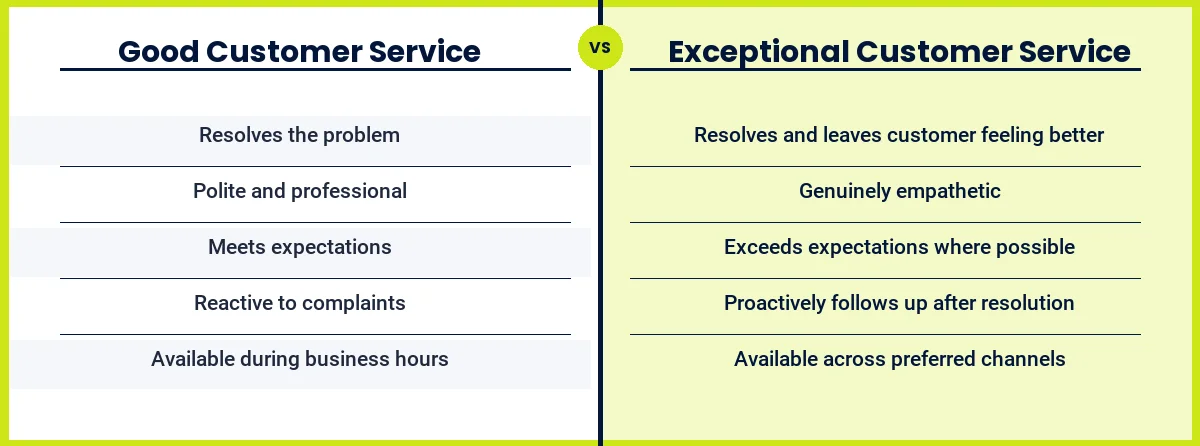
There’s a meaningful difference between good customer service and exceptional customer service. Good service resolves the issue. Exceptional service resolves the issue and leaves the customer feeling better about the company than before they called. That distinction creates loyalty no marketing budget can buy.
Exceptional customer service is a company-wide commitment that starts with the agents on the front line and extends to the systems, training, and culture that support them.
Why Exceptional Customer Service Matters: By the Numbers
The business case for exceptional customer service is well documented. Here are the numbers that illustrate why getting this right is one of the highest-leverage investments a company can make.
Customers who have the best experiences spend 140% more than those with poor experiences, according to research published in the Harvard Business Review. The gap between your best customers and your average customers often comes down to how they were treated at a critical moment.
A 5% increase in customer retention can increase profits by 25 to 95%. This figure, from Bain and Company’s research on customer loyalty, shows why retention economics matter far more than most companies realize. The customers you already have are your most profitable ones.
96% of consumers say customer service is important in their choice of loyalty to a brand (Microsoft, State of Global Customer Service Report). For nearly every customer you interact with, how you treat them is a direct factor in whether they stay.
Only 1 in 26 unhappy customers actually complains. The other 25 simply leave (Kolsky). Poor service is largely invisible. You rarely hear about the problem until the customer is already gone.
73% of consumers say customer experience is an important factor in their purchasing decisions (PwC, Experience is Everything). That experience is shaped almost entirely by the quality of human interactions, not by marketing, pricing, or product features alone.
89% of consumers are more likely to make another purchase following a positive customer service experience (Salesforce, State of the Connected Customer). Exceptional service is a direct driver of repeat revenue, not just a retention tool.

It costs 5 to 25 times more to acquire a new customer than to retain an existing one (Harvard Business Review / Bain and Company). Every dollar invested in exceptional service is working against that acquisition premium.
These statistics come from different industries and different time periods, but they point in the same direction: exceptional customer service is one of the clearest and most measurable drivers of business growth available to any company.
The DMIBPO 4-Pillar Framework for Exceptional Customer Service
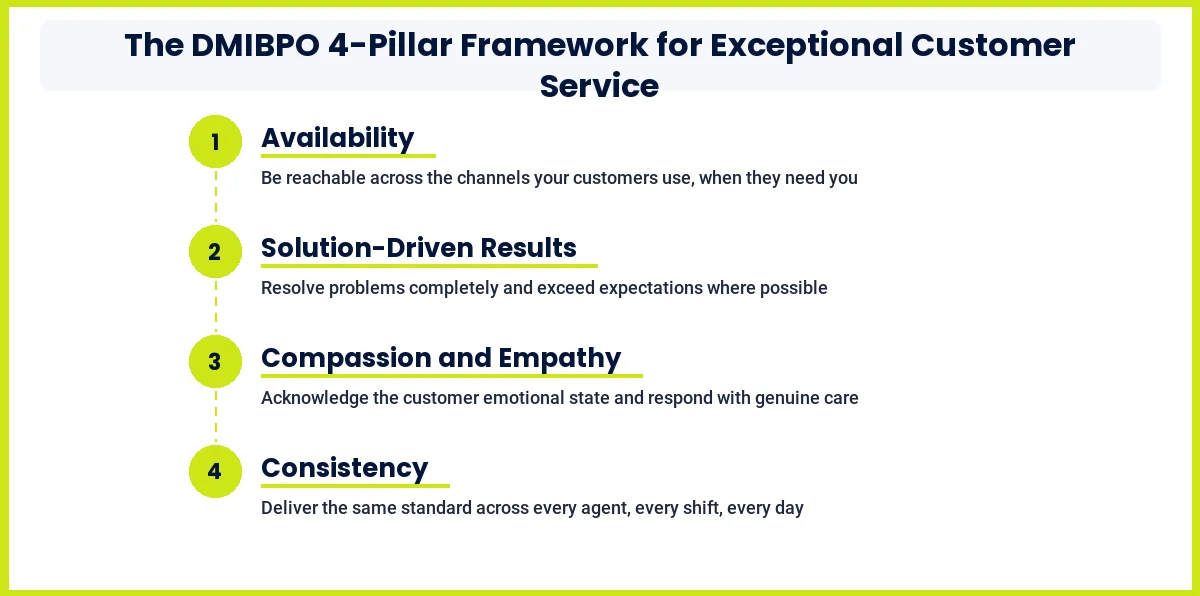
After 15 years of building customer service teams for businesses across the US, UK, Australia, and New Zealand, we’ve found that exceptional service consistently rests on four pillars. Miss any one of them, and the service suffers, no matter how strong the others are.
Pillar 1: Availability
Customers expect to reach you on their schedule, not yours. Limited hours and a single contact channel are the fastest way to communicate that your business doesn’t prioritize their experience. Companies that deliver exceptional service connect with customers through their preferred method, whether that’s phone support, email, live chat, social media, or text messaging.
Speed matters too. Close to half of all customers expect an initial response within four hours. Those who reach out via live chat or phone expect a response in minutes, not hours. Availability means being reachable fast, across the channels your customers actually use.
Pillar 2: Solution-Driven Results
Customers contact support because they have a problem. Acknowledging the problem isn’t enough. Exceptional service means resolving it, and when possible, resolving it in a way that exceeds what the customer expected.
This might mean resolving the issue faster than anticipated, offering a partial refund when the situation calls for goodwill, or proactively flagging a related issue the customer hadn’t noticed yet. Exceeding expectations rarely requires grand gestures. Often, it just requires going one step further than the customer thought you would. That step is what they remember and what they tell others about.
Pillar 3: Compassion and Empathy
A customer who contacts support is often frustrated, confused, or stressed. How your agent acknowledges that feeling shapes the entire tone of the interaction. Empathy is a functional requirement for a great customer experience, and treating it as a soft skill is where most companies get it wrong.
Agents need training to acknowledge the customer’s pain point directly, explain what they’ll do to resolve it, and follow through. Automated tools can handle simple queries efficiently, but many customers still need a human response, especially when the issue is complex or emotionally charged. The ability to read the situation and respond with genuine care is what separates good agents from exceptional ones.
Pillar 4: Consistency
Exceptional service on your best day is easy. The real measure is whether you can deliver the same standard on your busiest day, when systems are slow, queues are long, and your team is stretched. Consistency requires infrastructure: clear standard operating procedures, regular coaching, quality monitoring, and a culture where every agent understands that every customer deserves the same level of care.
SOPs are particularly important for maintaining consistency at scale. They let you analyze performance, identify gaps, and continuously improve without depending on individual heroics. Exceptional service is a system, not a personality trait.
10 Ways to Deliver Exceptional Customer Service
These are the practices that translate the four pillars into day-to-day behavior. They’re practical, teachable, and measurable.
- Take ownership of the problem. Make it clear to the customer that you’re personally committed to resolving their issue, not just routing them to someone else.
- Respond promptly: set clear response time standards and hold every agent accountable to them.
- Listen actively. Let the customer finish explaining before offering a solution, and ask clarifying questions when needed.
- Acknowledge the frustration first. Before jumping to the fix, recognize that the customer’s frustration is valid.
- Be accurate. Never guess. If you’re not sure, say so and find the right answer rather than giving incorrect information with confidence.
- Exceed the minimum: resolve the stated issue, then look for one more thing you can do to improve the customer’s situation.
- Follow up proactively. Check in after complex resolutions to confirm the solution is working. Customers rarely expect this and always remember it.
- Be transparent about mistakes. When the company is at fault, say so directly and focus on what you’re doing to make it right.
- Respect the customer’s time by minimizing hold times, avoiding unnecessary transfers, and resolving issues in one interaction whenever possible.
- Be proactive, not reactive. Identify patterns in recurring issues and address the root cause rather than waiting for the next complaint.
Related: 12 Ways To Improve Customer Service In Your Business
Real-World Examples of Exceptional Customer Service
Understanding exceptional service in the abstract is useful. Seeing it in practice is more useful. These examples show what going above and beyond actually looks like across different industries.
1. JetBlue: Small Acts That Create Loyal Customers
JetBlue Airlines has built a reputation for standout customer care through repeated small gestures that go well beyond standard service. In one widely shared example, a passenger tweeted his disappointment at missing a Starbucks before boarding. JetBlue saw the tweet, contacted an airport representative, and had a coffee delivered to the passenger at his seat before takeoff. The cost was minimal. The impact on that passenger’s loyalty, and the brand visibility from the story being shared, was significant.
2. Trader Joe’s and Chick-Fil-A: Going Beyond Normal Operations
Both companies went viral for helping customers during snowstorms in ways that had nothing to do with their normal operations. Chick-Fil-A staff handed out free sandwiches to motorists stranded on a highway. Trader Joe’s delivered groceries to an 89-year-old man trapped in his home during a storm, after every other store had turned his granddaughter down. Neither action was required. Both communicated something about the company’s values no advertisement could.
3. Zappos: Responding to Every Single Email
Zappos became well known for its policy of responding to every email the company receives, regardless of the topic or recipient. When a customer once emailed the CEO directly, a representative responded quickly and memorably. The result was a satisfied customer and a story that spread. Zappos understood that every interaction was either building or eroding brand reputation, and they built systems to make sure it was always the former.
4. Sainsbury’s: Listening to a Three-Year-Old
Sainsbury’s received a letter from a three-and-a-half-year-old girl who pointed out that their “tiger bread” looked nothing like a tiger. It looked like a giraffe. Sainsbury’s agreed and renamed the product. The decision generated enormous goodwill because it showed the company was genuinely listening, even to its youngest customers, and was willing to act on what it heard.
5. Digital Minds BPO: When a Typhoon Hits and the Phones Keep Ringing
During a Category 4 typhoon that made landfall near our Naga City facilities, one of our client’s customers called in with an urgent billing issue. Power was intermittent. Roads were closed. But our team, operating on backup systems, answered, resolved the issue, and logged the case before the line dropped.

That client told us later it was the interaction that renewed their confidence in outsourcing. Not because we were impressive. Because we were there.
Exceptional customer service shows up in the hard weeks, not just the easy ones. The companies that earn the deepest loyalty are the ones that show up when it would be easy to have an excuse not to.
What Our 15 Years Has Taught Us
After building customer service teams for businesses across four countries, here’s what we keep coming back to:
“After 15 years, the biggest mistake I see companies make is confusing fast with exceptional. Speed is table stakes. What actually keeps customers coming back is feeling like someone genuinely cared about their problem. We train for that from day one, and it’s harder to teach than any technical skill.”
— Charvel Rebagay, CEO, Digital Minds BPO
Speed matters. But speed without empathy produces transactions, not relationships. The businesses with the highest customer lifetime value are almost always the ones that figured out how to make customers feel like people, not tickets.
The Real Cost of Poor Customer Service
The consequences of poor customer service go beyond losing a single customer. They compound across retention, conversion, and reputation over time.
- Customer churn. 40% of customers have stopped doing business with a company because of poor service, and most never tell you why.
- Lost conversions: prospective customers who can’t reach your team or receive an inadequate response simply buy from someone else.
- Reputation damage. Negative experiences travel further than positive ones, and a single widely shared poor interaction can shape public perception in ways that take years to undo.
- Higher employee turnover. Agents working in a culture of poor service and unmanageable complaint volumes burn out faster, creating a cycle that makes service quality even harder to maintain.
Remember: only 1 in 26 unhappy customers complains. The other 25 leave quietly. By the time poor service shows up visibly in your metrics, it has already been silently eroding your business for much longer. The solution isn’t to get better at responding to complaints. It’s to reduce the conditions that create them.
How to Build a Team That Delivers Exceptional Service Consistently
Exceptional service is the output of a system built to produce it reliably, at scale, every day. It doesn’t come from a single star agent, and it doesn’t happen by luck.
That system starts with hiring. You can train technical skills and product knowledge. Empathy and ownership mentality are much harder to teach, which means hiring for character before capability is the highest-leverage decision a customer service leader makes.
Beyond hiring, it requires clear SOPs, regular quality monitoring, ongoing coaching, and a feedback loop that turns customer complaints into process improvements. Review your online reputation regularly. Analyze patterns in complaints and escalations. Use that data to improve training and systems, not just to manage the individual incidents.
For businesses that want to deliver this level of service without building the entire infrastructure in-house, outsourcing to a specialist is a proven path. BPO companies that specialize in customer service bring established hiring processes, training programs, quality frameworks, and technology already in place. You provide the product knowledge and service standards. They provide the team and the infrastructure. Done right, the result is outsourced customer service your customers can’t tell apart from in-house. Here’s a full breakdown of the pros and cons of outsourcing customer service if you’re evaluating that option.
Frequently Asked Questions
What is the difference between good and exceptional customer service?
Good customer service resolves the customer’s problem adequately and politely. Exceptional customer service goes further. It makes the customer feel heard and valued throughout the interaction, often exceeds what the customer expected in terms of speed or outcome, and leaves them with a stronger impression of the company than they had before the issue occurred. The difference is less about the resolution itself and more about how the customer felt during and after the experience.
What are the key qualities of exceptional customer service?
The four core qualities are availability (being reachable through the customer’s preferred channel, quickly), solution-driven focus (resolving problems thoroughly and proactively), empathy (acknowledging the customer’s frustration and responding with genuine care), and consistency (delivering the same standard across every agent, every shift, every day). Most companies can demonstrate one or two of these. Exceptional service requires all four working together.
How do you measure exceptional customer service?
Common metrics include Customer Satisfaction Score (CSAT), Net Promoter Score (NPS), First Contact Resolution rate (FCR), Average Handle Time (AHT), and customer retention rate. No single metric tells the full story. The most meaningful signal is customer retention over time, since it reflects whether customers valued their experience enough to stay. Complement metrics with direct feedback, including post-interaction surveys and review monitoring, to understand the qualitative dimension behind the numbers.
Can you outsource exceptional customer service?
Yes, and many companies do it successfully. The key is choosing a partner that hires for character and trains rigorously, not one that treats agents as interchangeable. The best outsourced customer service operations are indistinguishable from in-house teams from the customer’s perspective. They use the same brand voice, follow the same escalation protocols, and are measured against the same performance standards. The Philippines is the most established destination for outsourced customer service, combining strong English proficiency, cultural alignment with Western markets, and significant cost efficiency.
What is the DMIBPO 4-Pillar Framework for exceptional customer service?
The DMIBPO 4-Pillar Framework identifies the four conditions required for consistently exceptional customer service: Availability (being reachable, fast, across the right channels), Solution-Driven Results (resolving problems completely and exceeding the customer’s expectation where possible), Compassion and Empathy (acknowledging the customer’s emotional state and responding with genuine care), and Consistency (maintaining the same standard across every agent and every interaction, not just the easy ones). The framework is built from 15 years of building and managing customer service teams for businesses in the US, UK, Australia, and New Zealand.

Charvel Rebagay is the CEO and Founder of Digital Minds BPO, a Philippines-based outsourcing company he established in 2010. Based in Naga City, he works directly with clients and teams daily to ensure service quality across every engagement. With over 15 years of experience building and managing dedicated teams for businesses worldwide, Charvel has helped hundreds of companies scale their operations through skilled Filipino professionals. Under his leadership, Digital Minds BPO operates 3 dedicated facilities with a 94% client retention rate, serving Fortune 500 clients including P&G and Petron.