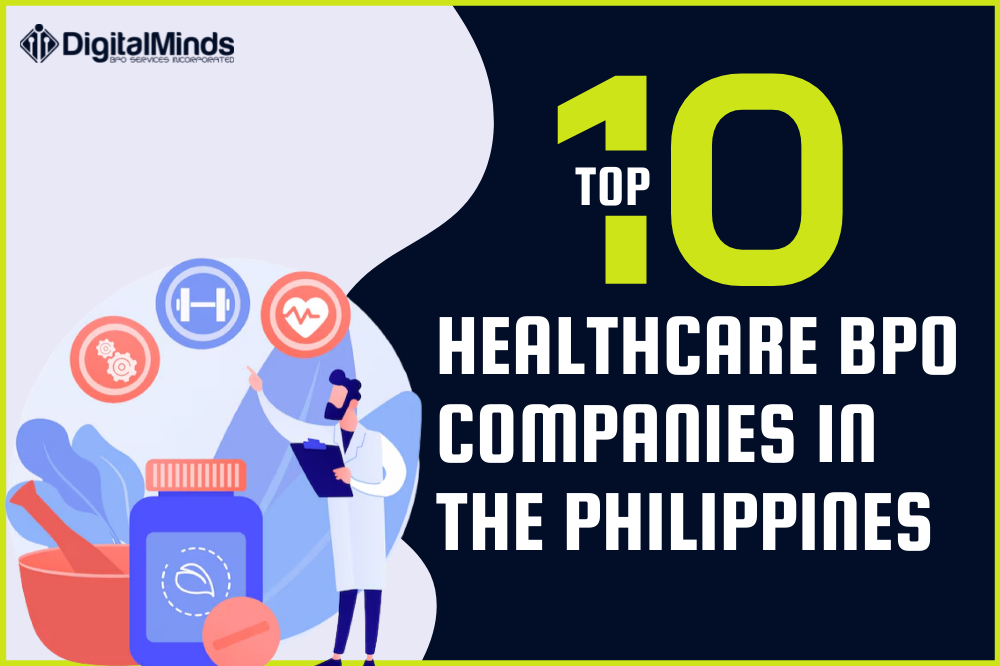
You are running a healthcare organization, and your administrative team is buried. Medical billing backlogs are growing, claims are getting denied, and your clinical staff spends more time on paperwork than on patients. Sound familiar? Healthcare BPO companies in the Philippines exist precisely to solve this problem. They handle the administrative and back-office work so your team can focus on what matters most: patient care.
Digital Minds BPO, a business process outsourcing company based in Naga City, Philippines, has spent over 15 years helping healthcare organizations streamline operations and cut costs. In that time, we have seen firsthand which outsourcing partnerships thrive and which ones fail. This 2026 guide gives you a practical, honest look at the top 10 healthcare BPO companies in the Philippines, what they specialize in, and how to choose the right one for your organization.
What Are Healthcare BPO Companies in the Philippines?
Healthcare BPO companies in the Philippines are specialized business process outsourcing firms that manage non-clinical administrative tasks for hospitals, clinics, insurance payers, and healthcare networks. These tasks include medical billing, claims processing, revenue cycle management, patient support, medical coding, and data entry. According to Markets and Markets, the global healthcare BPO market is valued at $424.76 billion in 2026 and projected to reach $734.86 billion by 2030 at a compound annual growth rate of 14.7%. The Philippines captures a significant share of this growth, generating $4.2 billion in healthcare BPO revenue and employing 190,000 professionals in the sector as of 2024 (DTI industry data).
For healthcare organizations in the US, UK, Australia, and New Zealand, outsourcing to the Philippines delivers up to 70% in labor cost savings compared to hiring locally, without sacrificing quality, compliance, or the patient experience.
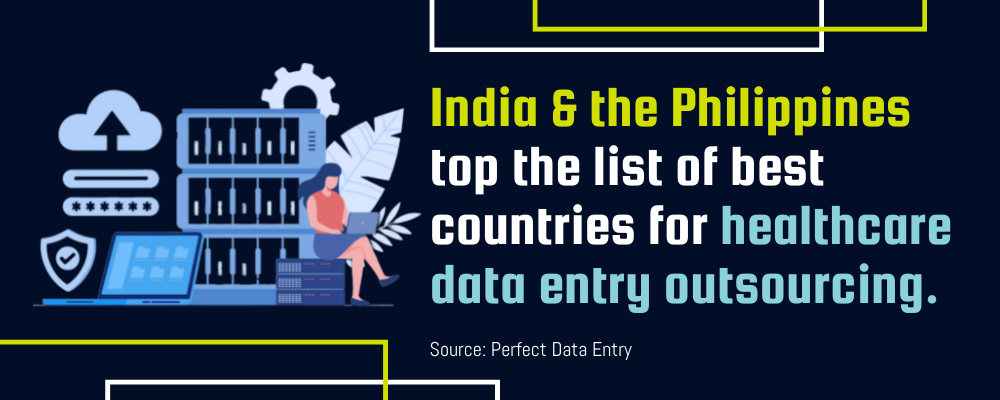
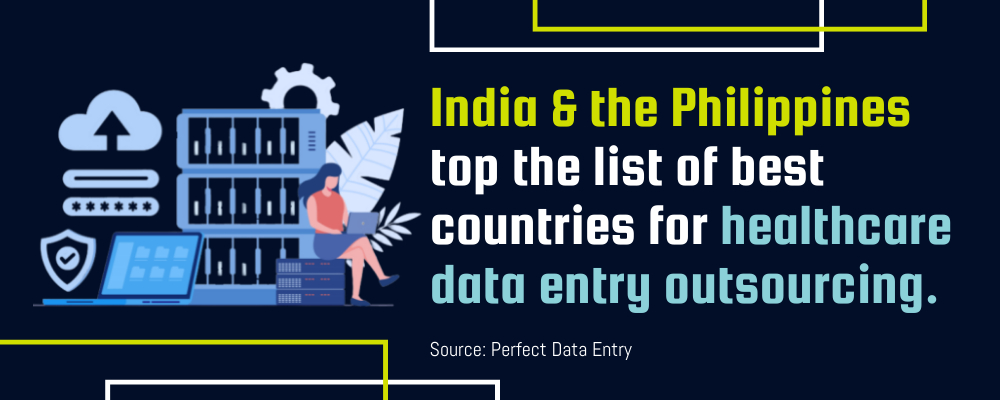
Why the Philippines for Healthcare BPO?
The Philippines has become one of the world’s leading destinations for healthcare outsourcing, and this is not an accident. Several structural advantages make Filipino BPO teams exceptionally well-suited for healthcare work.
A Medically Trained Workforce
The Philippines produces over 120,000 nursing and allied health graduates annually. Many of these graduates enter BPO roles rather than migrating abroad, bringing genuine clinical literacy to administrative functions. A Filipino medical coder understands the terminology. A billing specialist who studied healthcare administration does not need to be taught what a CPT code is. That foundational knowledge reduces training time and improves accuracy from day one.
English Proficiency and Cultural Affinity
The Philippines ranks among the highest in Asia for English proficiency. More importantly, the country’s healthcare workers are culturally aligned with Western systems. Having been exposed to American medical television, US healthcare insurance structures, and Western patient expectations through decades of cultural exchange, Filipino professionals adapt quickly to US, UK, and Australian healthcare environments.
Government Support and Industry Investment
The Philippine government actively supports healthcare BPO through PEZA (Philippine Economic Zone Authority) incentives and industry development programs. HIMSS (Healthcare Information and Management Systems Society) has also recorded over $79 million in healthcare IT deals linked to Philippine BPO operations. The IT-BPP Roadmap targets a 9% CAGR for the broader BPO industry between 2022 and 2028, with healthcare as one of the fastest-growing verticals.
24/7 Coverage Across Time Zones
Philippine BPO teams operate around the clock, covering US daytime hours during Philippine night shifts without burnout or overtime costs. For healthcare organizations managing after-hours patient inquiries, emergency authorization calls, or continuous claims processing, this time zone advantage is operationally significant.
Cost Advantage
A US-based medical billing specialist earns approximately $45,000 per year in salary alone, before you add benefits, payroll taxes, office space, and equipment. A comparable Filipino specialist at a reputable BPO costs $8,000 to $12,000 annually, all-in. That is a 50% to 70% reduction in total labor cost. For healthcare organizations processing hundreds of claims per day, those savings compound quickly.
What Is a Healthcare Account in BPO?
In BPO terminology, a “healthcare account” refers to a client engagement where the BPO team handles administrative and support functions for a healthcare organization. This is one of the most in-demand account types in the Philippine BPO industry because of the country’s large pool of medically trained professionals.
Healthcare accounts typically involve tasks such as:
- Medical billing and collections
- Insurance claims processing and denial management
- Medical coding (ICD-10, CPT, HCPCS)
- Prior authorization and eligibility verification
- Revenue cycle management (RCM)
- Patient appointment scheduling and follow-up
- Medical transcription and data entry
- Customer support for patients, providers, and payers
Workers on healthcare accounts in the Philippines typically need to pass HIPAA training, understand US healthcare insurance structures, and, in many cases, hold certification in medical coding or billing. For BPO career seekers, healthcare accounts offer higher compensation than general customer service roles. For healthcare organizations, this means the talent pool on your account is genuinely qualified, not generalist call center staff.
Top 10 Healthcare BPO Companies in the Philippines (2026)
Here are the top healthcare BPO providers operating in the Philippines in 2026, starting with our own company so you know exactly where we stand and what makes us different.
1. Digital Minds BPO Services Inc.

Location: Naga City, Philippines
Founded: 2010 (15+ years in operation)
Team Size: 3 facilities, 15+ years in operation
Digital Minds BPO Services Inc. is a HIPAA-compliant business process outsourcing company that has served healthcare clients since 2010. With a 94% client retention rate and an average partnership length of 4.7 years, Digital Minds BPO is known for treating healthcare clients as long-term partners, not transactional accounts.
What sets Digital Minds BPO apart in the healthcare space is its combination of compliance, personalization, and cost efficiency. All team members handling healthcare accounts undergo comprehensive HIPAA Security and Privacy training annually. Business Associate Agreements (BAA) are standard in every healthcare client contract. Dedicated teams are assigned per client, so you get specialists who know your workflows, not rotating generalists who need constant retraining.
Healthcare services offered by Digital Minds BPO include medical claims processing, data entry, medical transcription, billing services, medical coding, accounts receivable management, appointment scheduling, insurance verification, answering services, patient outreach, and customer service. Pricing starts at $924 per month per agent ($5.50 per hour), delivering up to 70% in cost savings compared to US-based staffing. With Fortune 500 clients including Procter & Gamble and Petron, and government clients including the Bureau of Customs, Digital Minds BPO brings enterprise-grade discipline to every engagement.
Best for: Mid-sized healthcare organizations and medical practices seeking a dedicated, HIPAA-compliant team with transparent pricing and long-term partnership culture.
2. MicroSourcing

Location: Bonifacio Global City, Taguig, Metro Manila
Certifications: ISO 9001, ISO 27001
MicroSourcing is one of the Philippines’ largest dedicated offshoring providers, with a strong focus on American healthcare companies. With over 500 employees working on healthcare accounts, MicroSourcing offers depth in medical coding, quality assurance, medical transcription, medical claims processing and analysis, chart retrieval, and healthcare advising.
MicroSourcing’s ISO 9001 and ISO 27001 certifications signal a mature approach to quality management and information security, which is critical for healthcare data handling. Their compliance posture aligns with the strict requirements mandated by global healthcare and insurance agencies. For organizations that need scale combined with compliance, MicroSourcing is a solid candidate.
Best for: American healthcare payers and larger provider networks that need scale and ISO-certified compliance infrastructure.
3. Magellan Solutions

Location: Mandaluyong City, Metro Manila
Founded: Approximately 2005 (21+ years in operation)
Magellan Solutions is a long-standing Philippine BPO with over two decades of operational history in the healthcare sector. Their healthcare-focused services include medical insurance outsourcing, medical consultation solutions, and healthcare call center support. The company positions itself around a client-centric methodology designed to help healthcare organizations deliver consistent, quality patient service.
Magellan Solutions is well established in the Philippine BPO market, particularly for SME-sized healthcare clients who need flexible engagement models. Their longevity in the market reflects operational stability, which matters when you are entrusting sensitive patient data to an external partner.
Best for: Healthcare organizations looking for an experienced Philippine BPO with a long track record in medical insurance and call center support.
4. Alorica

Location: Makati City (Philippine headquarters)
Notable: World’s largest minority-owned BPO provider; Certified Minority Business Enterprise (MBE)
Alorica operates globally and brings a significant Philippine presence to its healthcare practice. The company’s healthcare offerings span healthcare payer solutions, pharmacy benefit management (PBM) solutions, healthcare provider solutions, and customer analytics. Alorica’s multicultural team structure is particularly suited to serving diverse patient populations where language and cultural nuance affect care quality and satisfaction scores.
With 24/7 omnichannel capabilities, Alorica handles the full spectrum of patient and member interactions across voice, chat, email, and digital channels. This breadth makes them attractive to large health systems with complex, multi-channel support needs.
Best for: Large health plans and payers that need omnichannel member support with diversity and inclusion considerations built in.
5. Acquire BPO Philippines

Location: Pasig City, Philippines
Specializations: Back-office support, revenue cycle management, technical support
Acquire BPO Philippines offers one of the most comprehensive revenue cycle management portfolios among Philippine healthcare BPO providers. Their healthcare-specific services cover the entire RCM lifecycle: eligibility verification and pre-insurance verification, claims transmission and processing, denial management, medical billing and collections, medical coding, payment posting, credit balance resolution, patient follow-up and patient statements, provider enrollment and credentialing, and medical records indexing.
This depth in RCM makes Acquire BPO a strong option for healthcare organizations that have experienced revenue leakage due to billing inefficiencies or denial management gaps. Their technology infrastructure supports integration with major practice management and electronic health record (EHR) systems.
Best for: Healthcare providers and physician groups that need end-to-end revenue cycle management support with strong technology integration capabilities.
6. Accenture

Headquarters: Dublin, Ireland (global operations including Philippines)
Team Size: 730,000+ employees globally
Accenture’s healthcare practice in the Philippines is part of its global operations strategy, with significant delivery capability across Metro Manila. The company introduced its “Insight-Driven Healthcare” strategy, which focuses on streamlining operations through digital care coordination tools and advanced analytics. Accenture’s healthcare clients gain access to enterprise-grade digital transformation capabilities alongside traditional BPO functions.
For smaller or mid-market healthcare organizations, Accenture’s global scale can work against them: minimum contract sizes are large, and the account management ratio may not provide the personalized attention that smaller organizations need. However, for large health systems pursuing major digital transformation alongside outsourcing, Accenture is a capable partner.
Best for: Large hospital systems and integrated health networks pursuing enterprise-level digital transformation alongside BPO services.
7. Foundever (formerly Sykes Enterprises)
Headquarters: Tampa, Florida (global delivery including Philippines)
Rebranded: March 2023 (Sykes Enterprises merged with Sitel Group to form Foundever)
Foundever, formed through the March 2023 merger of Sykes Enterprises and Sitel Group, is one of the largest customer experience companies in the world. Its healthcare practice covers both the insurance and clinical sides of the industry, offering a comprehensive service portfolio that few competitors match.
On the healthcare plans side, Foundever handles eligibility and plan benefits inquiries, claims inquiries, self-service and website support, and plan sales. For healthcare delivery, the company processes claims and manages adjudication workflows. Device and product services include prescription drug assistance programs, mail-order pharmacy support, scheduling, billing plans, and help desk operations. Health and wellness management services extend to lifestyle and wellness coaching, healthcare system navigation, chronic disease management, palliative care support, and telehealth coordination.
This breadth across medical and insurance processes makes Foundever valuable to integrated payer-provider organizations.
Best for: Integrated healthcare organizations and health plans that need comprehensive support across both payer and provider functions.
8. Concentrix

Founded in: United States (extensive Philippines delivery network)
Philippines Presence: 50+ branches nationally
Concentrix is a global leader in customer experience technology and services, with deep roots in the Philippines. Their healthcare practice is built on a technology-forward model, with AI-augmented workflows supporting human agents in clinical and administrative functions. Concentrix’s healthcare services cover coverage review determinations, prior authorizations, patient services, clinical review, and case registration for workers’ compensation.
Concentrix’s philosophy, centered on designing and building the future of customer experience, translates into healthcare workflows that are data-driven and continuously improving. For healthcare organizations that want a partner investing heavily in technology-human collaboration, Concentrix delivers that capability at scale.
Best for: Healthcare organizations that prioritize technology-forward, AI-augmented BPO with a large operational footprint in the Philippines.
9. Calibrated Healthcare Network (CHN)
Specialty: Healthcare administrative management
Certifications: SOC 1 Type I and SOC 2 Type II
Calibrated Healthcare Network (CHN) is a specialized provider focused on completing the “healthcare administrative puzzle” for institutions globally. Unlike generalist BPOs, CHN’s entire service portfolio is built around healthcare administration, making it one of the most focused providers on this list.
Healthcare administration services include managed care, claims, benefits plan administration, state enrollment, claims review and appeals, PDR reviews, HCC coding and audit, and MSO development. Administrative support for medical management extends to calibrated utilization management programs, inpatient UM, revenue recovery, specialty referral tracking, denial management, and ED clinical documentation. CHN’s SOC 1 Type I and SOC 2 Type II data security certifications are particularly significant for healthcare clients who require demonstrable third-party security validation beyond HIPAA attestation.
Best for: Health systems and managed care organizations that need a deeply specialized healthcare administrative partner with verified security certifications.
10. GeBBS Healthcare Solutions
Specialty: Telehealth integration and administration
Focus: Revenue cycle management and coding analytics

GeBBS Healthcare Solutions brings a technology-driven approach to healthcare revenue cycle management, with particular strength in telehealth integration and administration. Their platform capabilities include a rules engine for identifying suspected risk and opportunity, concurrent and retrospective review, robust reporting and analytics with coder and provider education, and an E&M calculator for service level assignment.
Telehealth-specific services include telehealth benchmarking, auditing of telehealth services, EMR and PMS integration, and revenue maximization solutions. As telehealth has become a permanent part of the healthcare delivery landscape, GeBBS’s early investment in this area gives them a meaningful advantage for organizations with significant virtual care volume.
Best for: Healthcare organizations with significant telehealth volume seeking specialized revenue cycle management and coding analytics.
Quick Comparison: Top 10 Healthcare BPO Companies in the Philippines
Use this table to compare the top 10 providers side by side before diving into the details.
| Company | Location | Key Specialization | Notable Feature | Best For |
|---|---|---|---|---|
| Digital Minds BPO | Naga City | Full-service healthcare BPO, HIPAA compliant | 94% retention rate, dedicated teams, starts at $924/mo | Mid-market healthcare, dedicated long-term partnership |
| MicroSourcing | Taguig, Metro Manila | Medical coding, transcription, claims | ISO 9001 and ISO 27001 certified | US healthcare payers needing compliance infrastructure |
| Magellan Solutions | Mandaluyong, Metro Manila | Medical insurance, call center support | 21+ years operational history | Healthcare orgs needing experienced Philippine BPO |
| Alorica | Makati City | Payer solutions, PBM, patient analytics | World’s largest minority-owned BPO | Large health plans with diverse member populations |
| Acquire BPO | Pasig City | End-to-end revenue cycle management | Full RCM lifecycle, EHR integration | Physician groups with revenue leakage issues |
| Accenture | Global (Metro Manila delivery) | Digital transformation, insight-driven healthcare | 730,000+ global employees | Large hospital systems pursuing digital transformation |
| Foundever | Global (Philippines delivery) | Payer and provider support, telehealth, wellness | Merged Sykes + Sitel (rebranded March 2023) | Integrated payer-provider organizations |
| Concentrix | Philippines (50+ branches) | AI-augmented clinical and admin workflows | Technology-forward CX model | Healthcare orgs prioritizing AI-human collaboration |
| CHN | Philippines | Managed care, utilization management, HCC coding | SOC 1 Type I and SOC 2 Type II certified | Managed care orgs needing deep specialization |
| GeBBS Healthcare | Philippines | Telehealth administration, RCM analytics | E&M calculator, telehealth benchmarking | Organizations with significant virtual care volume |
Healthcare Outsourcing Market: What the Data Says for 2026
The healthcare BPO market is one of the fastest-growing segments in global outsourcing. Understanding the size and trajectory of this market helps you evaluate the urgency of your own outsourcing decision.
According to Markets and Markets, the global healthcare BPO market stands at $424.76 billion in 2026, projected to reach $734.86 billion by 2030 at a compound annual growth rate of 14.7%. This is a significant upward revision from prior estimates, driven by accelerating demand for administrative efficiency, the expansion of telehealth, and rising claims volumes across Western healthcare systems.
The Philippine healthcare BPO sector is tracking above the global average. DTI industry data puts Philippine healthcare BPO revenue at $4.2 billion in 2024, supporting 190,000 full-time employees including medical practitioners, nurses, and certified coders. The broader Philippine IT-BPP industry is growing at a 9% CAGR between 2022 and 2028, with healthcare identified as one of the primary growth drivers.
US healthcare organizations represent the largest outsourcing client base. A US-focused segment analysis from Markets and Markets projects the US healthcare BPO market reaching $212.35 billion by 2030 at an 8.11% CAGR. The administrative burden on US healthcare providers continues to grow: according to the Annals of Internal Medicine, US physicians spend nearly 49% of their working day on administrative tasks rather than direct patient care. Outsourcing administrative functions addresses this directly.
For healthcare organizations considering outsourcing, the business case is clear: the industry is moving in this direction, the talent infrastructure in the Philippines is mature, and the cost savings are substantial and well-documented. The question is not whether to outsource, but which partner to choose and where to start.
Benefits of Healthcare Outsourcing: What You Actually Gain
How Healthcare Outsourcing Cuts Costs by Up to 70%
Labor cost reduction is the most immediate and measurable benefit. A US-based medical billing specialist earns approximately $45,000 per year in base salary. When you factor in benefits, payroll taxes, office overhead, and turnover costs, the true annual cost per employee is closer to $60,000 to $70,000. A comparable specialist at a Philippines-based BPO costs $8,000 to $12,000 per year, all-in. That is a reduction of between 50% and 70%.
At Digital Minds BPO, pricing starts at $924 per month per agent ($5.50 per hour), with the exact rate depending on the role complexity and required certifications. For a team of five billing and coding specialists, the annual saving compared to US-based staffing can exceed $250,000. Learn more about outsourcing costs and what to budget for your first engagement.
Increased Efficiency and Focus on Patient Care
When your administrative workload is handled by a dedicated external team, your in-house clinical staff can redirect their time to direct patient care. This is not a soft benefit. Research published in the Annals of Internal Medicine found that for every hour of direct patient care, US physicians spend nearly two additional hours on administrative tasks. Outsourcing the administrative layer does not eliminate that burden completely, but it significantly reduces the portion that falls on your internal team.
Philippine BPO teams operate 24/7 through shift structures, which means claims processing, billing follow-up, and denial management continue even after your in-house staff has gone home. Backlogs shrink. Revenue cycles tighten. Patient follow-ups happen on schedule.
HIPAA Compliance as a Built-In Practice
HIPAA compliance is non-negotiable in healthcare outsourcing. The Health Insurance Portability and Accountability Act (HIPAA) of 1996 establishes federal standards for the protection of individually identifiable health information. When you work with an external partner who handles protected health information (PHI), that partner becomes a Business Associate under HIPAA, and a Business Associate Agreement (BAA) must be executed before any PHI is shared.
Reputable Philippine healthcare BPOs treat HIPAA compliance as an operational practice, not a certification checkbox. This means annual staff training, role-based access controls, encrypted data transmission, audit logging, and breach notification protocols. Before engaging any healthcare BPO, confirm that they will sign a BAA, ask for evidence of annual HIPAA training completion, and inquire about their security incident history and response procedures.
Related certifications to look for include HITRUST Common Security Framework (CSF) certification, ISO 27001 (information security management), SOC 2 Type II (security and availability controls), and GDPR compliance for organizations serving European patients. See our guide to insurance claims outsourcing for a deeper look at compliance requirements in payer environments.
Access to Specialized Talent
Recruiting certified medical coders, experienced billers, and knowledgeable patient support specialists is difficult and expensive in the US, UK, and Australia. In the Philippines, the talent pool is deep because of the country’s medical education infrastructure. Philippine BPO companies maintain ongoing training programs and professional certification pipelines, so the staff assigned to your account arrives with relevant qualifications rather than needing to be built from scratch.
Scalability Without Long-Term Commitment Risk
Healthcare organizations experience seasonal volume fluctuations, regulatory changes, and growth spurts. Outsourcing gives you the ability to scale your team up or down based on actual need, without the risk of overstaffing during slow periods or scrambling to hire during peak seasons. Most reputable BPO providers can add trained healthcare specialists to your account within 30 to 60 days of request. See the call center outsourcing services guide for more on how flexible staffing models work in practice.
Technology and AI in Healthcare BPO
Artificial intelligence is changing the operational landscape of healthcare BPO in 2026, but not by replacing trained agents. The role of AI in this sector is to handle high-volume, repetitive tasks so that your dedicated specialists can focus on the complex, judgment-intensive work that actually drives revenue and patient satisfaction.
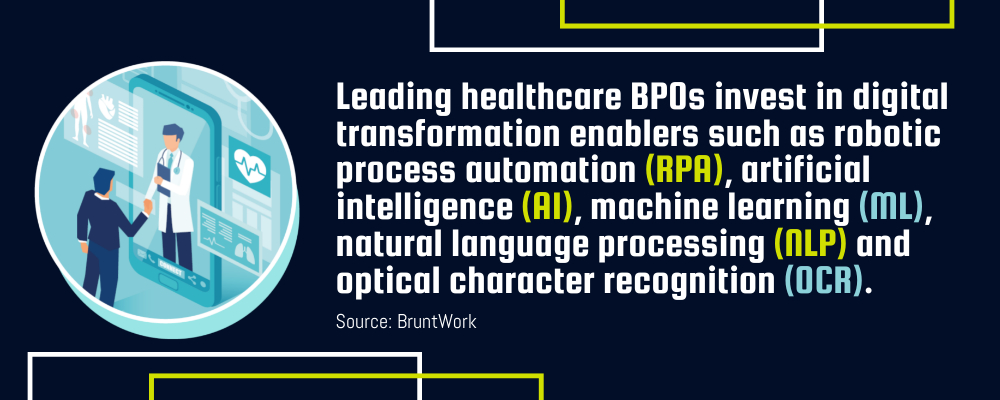
Robotic Process Automation (RPA) handles repetitive data entry tasks such as posting payments, updating patient demographics, and routing standard claims, at speeds and accuracy rates that humans cannot match for volume processing. Natural language processing (NLP) assists medical coders by identifying relevant ICD-10 and CPT codes from clinical notes, reducing time-per-record while your certified coders validate and finalize the output. Predictive analytics tools flag accounts likely to result in denial before submission, allowing your billing specialists to correct issues proactively rather than reactively managing denials after the fact.
The critical distinction is this: AI handles repetitive data tasks so your trained agents can focus on complex claims, difficult patient interactions, and denial appeals that require genuine expertise and judgment. The human element is not being replaced; it is being elevated to higher-value work. For healthcare organizations, this means better outcomes per agent, not fewer agents.
Digital Minds BPO integrates AI-assisted workflows into healthcare accounts where appropriate, always with human oversight and within HIPAA-compliant data handling protocols.
Revenue Cycle Improvement
Revenue cycle management is where the financial impact of healthcare outsourcing is most directly felt. RPA-enabled workflows reduce billing errors, which reduces claim denials. Faster claim submission cycles speed up payer reimbursement. Systematic denial management and appeals processes recover revenue that would otherwise be written off. Dedicated patient follow-up teams reduce outstanding balances. The cumulative effect is a tighter, healthier revenue cycle that supports the financial sustainability of your organization.
What 15+ Years of Healthcare BPO Has Taught Us
Digital Minds BPO, a Philippine-based business process outsourcing company with over 15 years of experience in healthcare accounts, has learned some hard lessons that we share openly with prospective clients.
The biggest mistake healthcare companies make when outsourcing is starting with too many processes at once. When an organization hands over medical billing, claims processing, denial management, and patient follow-up simultaneously to a new partner, the transition is chaotic for everyone. The most successful implementations we have seen start with one process, get it right over 60 to 90 days, and then expand. This phased approach also gives both teams time to develop the working relationships that make long-term partnership effective.
HIPAA compliance is not a checkbox; it is a daily practice built into every workflow. We have seen organizations choose BPO partners based on price alone, only to discover that the partner’s HIPAA training is annual-only and not reinforced in day-to-day operations. At Digital Minds BPO, HIPAA protocols are embedded in our standard operating procedures for every healthcare account: role-based access, encrypted data handling, and mandatory reporting for any suspected security incident. This is not extra; it is standard.
The best results come from treating your outsourced team as an extension of your in-house staff. Healthcare clients who share their internal style guides, participate in regular quality reviews, and include their Philippine team in training updates consistently outperform those who treat outsourcing as a set-and-forget arrangement. Our 4.7-year average partnership length reflects this: the clients who invest in the relationship get the most out of it.
Data security concerns diminish with experience, not assurances. Almost every healthcare prospect we engage with expresses concern about data security in the first 30 days. By day 90, after seeing our access controls, monitoring logs, and incident-free operation, that concern typically resolves. We recommend that every healthcare organization conduct a thorough security assessment before signing, and then conduct quarterly reviews in the first year. Transparency from your BPO partner is a green flag; defensiveness about security questions is a red flag.
How to Find the Right Healthcare BPO Partner
Choosing a healthcare BPO partner is not a procurement decision; it is a strategic one. The wrong choice costs you more in transition expenses, revenue disruption, and compliance risk than you would have saved by outsourcing in the first place. Here is a practical framework for evaluating your options.
Be Clear About Your Primary Needs
Before you talk to any BPO provider, define precisely which functions you want to outsource, the volume involved, the compliance requirements that apply, and your target cost. Vague briefs produce vague proposals. The more specific you are about what you need, the better you can evaluate whether a provider’s response is genuine capability or sales generalization. Also read through these questions to ask before you outsource to prepare for provider conversations.
Evaluate Compliance Credentials Carefully
For healthcare outsourcing, the minimum compliance requirement is HIPAA attestation and a willingness to sign a Business Associate Agreement (BAA). Beyond that minimum, look for providers with HITRUST CSF certification, ISO 27001, SOC 2 Type II, and GDPR compliance if your patient base includes European residents. Ask not just whether certifications exist, but when they were last audited and what the scope of the certification covers.
Ask About KPIs and Measurement
A good healthcare BPO partner should be transparent about how performance will be measured. Key metrics to ask about include:
- Claim submission accuracy rate and first-pass acceptance rate
- Denial rate and denial recovery rate
- Days in accounts receivable (A/R)
- Average handle time and first call resolution for patient support
- Call abandonment rate and average speed of answer
- Patient satisfaction scores (CSAT) where applicable
If a provider cannot tell you which KPIs they track and what their current performance looks like, that is a warning sign. You should also ask how they handle performance shortfalls: what is the escalation process, and what remedies do you have if SLAs are missed?
Choose a Partner with Healthcare-Specific Staff
Not every BPO agent can work a healthcare account effectively. Medical billing requires understanding of payer rules, CPT and ICD-10 coding, and revenue cycle logic. Claims processing requires attention to detail and familiarity with denial reason codes. Patient support requires empathy and knowledge of healthcare system navigation. Ask potential partners how they recruit for healthcare accounts, what certifications they require or provide, and what the training timeline looks like before an agent is placed on your work.
Watch Out for Hidden Costs
Setup fees, technology licensing, training costs, and management fees can add 20% to 40% to a quoted monthly rate. Get a fully loaded cost estimate before committing. Also read our post on the hidden costs of outsourcing for a complete breakdown of what to watch for in any BPO contract.
Partner Selection Criteria at a Glance
| Criteria | What to Look For | Red Flag |
|---|---|---|
| HIPAA Compliance | BAA willingness, annual staff training, documented protocols | HIPAA mentioned only in marketing, not in operations |
| Security Certifications | HITRUST, ISO 27001, SOC 2 Type II | Certifications expired or unaudited |
| Healthcare Experience | Dedicated healthcare team, certified coders/billers | Generalist BPO with no healthcare-specific track record |
| Transparency on KPIs | Named metrics, reported regularly, contractually committed | Vague performance language in the contract |
| Pricing Structure | All-inclusive or clearly itemized; no hidden fees | Low headline rate with long list of add-ons |
| Team Model | Dedicated team per client, consistent staffing | Shared or pooled agent model for healthcare |
| Communication | Named account manager, regular reporting cadence | No single point of contact, reactive communication |
If you want to understand the full landscape of types of outsourcing before committing to a model, that guide walks you through the key distinctions between onshoring, nearshoring, and offshoring.
Healthcare Services You Can Outsource to the Philippines
Not sure which functions are appropriate to outsource? Here is a practical rundown of the most commonly outsourced healthcare administrative services and why each one is a strong candidate for a Philippine BPO team.
- Medical billing and collections: End-to-end billing cycle management including charge capture, claim submission, payment posting, and collections follow-up.
- Medical coding (ICD-10, CPT, HCPCS): Accurate assignment of medical codes from clinical documentation, a function that requires certified coders and ongoing education as code sets are updated.
- Insurance claims processing: Submission, tracking, denial management, appeals, and resubmission. See the full insurance claims outsourcing guide for specifics.
- Revenue cycle management: The full RCM lifecycle from patient registration and eligibility verification through to final payment reconciliation.
- Medical data entry: Patient demographics, medical records indexing, EHR data migration, and document digitization.
- Medical transcription: Converting physician dictation and clinical notes into accurate written records.
- Patient support and answering services: Inbound patient calls, appointment scheduling, prescription inquiries, and general healthcare navigation support.
- Prior authorization and eligibility verification: Verifying patient insurance eligibility and obtaining prior authorizations before procedures, reducing claim denials at the source.
- Healthcare call center services: 24/7 patient communication, nurse triage line support, emergency hotline management, and provider inquiry handling.
- Virtual receptionist services: Front-desk functions including appointment booking, patient registration, and caller routing.
For a comprehensive look at healthcare outsourcing services and how to prioritize which functions to hand off first, read the guide on top healthcare outsourcing services.
Conclusion: Finding Your Healthcare BPO Partner in the Philippines
The Philippine healthcare BPO industry in 2026 is mature, specialized, and well-equipped to support the administrative needs of healthcare organizations across the US, UK, Australia, and New Zealand. The 10 companies on this list represent a range of scale, specialization, and pricing, from globally integrated enterprise providers to dedicated boutique specialists.
The right choice depends on your organization’s size, the specific functions you need to outsource, your compliance requirements, and whether you prioritize scale or personalization. For mid-sized healthcare organizations seeking a long-term dedicated partner with transparent pricing and a 15-year track record, Digital Minds BPO is built for exactly that. Our 94% client retention rate and 4.7-year average partnership reflect what happens when you treat outsourcing as a relationship rather than a transaction.
If you are ready to explore what outsourcing to the Philippines looks like for your specific healthcare workflows, the next step is a conversation. We will walk you through what your team would look like, what compliance protocols apply, and what the cost comparison looks like for your situation, with no obligation and no pressure.
Learn more about offshoring in the Philippines and why healthcare organizations are increasingly choosing Philippine BPO partners for mission-critical administrative work.
Frequently Asked Questions
What is healthcare BPO?
Healthcare BPO (Business Process Outsourcing) refers to contracting external service providers to handle non-clinical administrative functions for healthcare organizations. These functions include medical billing, coding, claims processing, revenue cycle management, patient support, and data entry. According to Markets and Markets, the global healthcare BPO market is valued at $424.76 billion in 2026 and growing at a 14.7% CAGR. Healthcare organizations outsource these functions to reduce costs, improve operational efficiency, and ensure compliance with regulations like HIPAA.
How do Philippine healthcare BPOs ensure HIPAA compliance?
Reputable Philippine healthcare BPOs maintain HIPAA compliance through annual staff training, role-based access controls, encrypted data transmission, audit logging, and Business Associate Agreements (BAA) with every healthcare client. HIPAA compliance applies to any organization handling protected health information (PHI) on behalf of a US healthcare covered entity, regardless of where the BPO is located. Additional certifications to look for include HITRUST CSF, ISO 27001, and SOC 2 Type II, which provide third-party validation of security and compliance practices beyond self-attestation.
How much does it cost to outsource healthcare functions to the Philippines?
Costs vary by service type, volume, and required certifications. As a general benchmark, a dedicated healthcare BPO agent in the Philippines costs $924 to $1,764 per month ($5.50 to $10.50 per hour), compared to $3,500 to $5,000 per month for a comparable US-based employee. Medical billing outsourcing for a practice generating $500,000 per month in collections typically costs $10,000 to $35,000 per month depending on the scope of services and denial management complexity. Total cost savings for US healthcare organizations outsourcing to the Philippines typically range from 50% to 70% compared to equivalent in-house staffing.
What are the most commonly outsourced healthcare services?
The most commonly outsourced healthcare services are medical billing, medical coding, insurance claims processing, revenue cycle management, medical data entry, medical transcription, patient appointment scheduling, eligibility verification, prior authorization, and patient support services. Medical billing and claims processing represent the highest volume, driven by the complexity of US payer rules and the cost of US-based billing specialists. Healthcare outsourcing services have expanded significantly since 2020, with telehealth administration and remote patient monitoring support becoming increasingly common additions.
What should I look for when choosing a healthcare BPO partner?
When choosing a healthcare BPO partner, prioritize HIPAA compliance with BAA, relevant security certifications (HITRUST, ISO 27001, SOC 2), healthcare-specific staffing with certified coders and billers, transparent KPI reporting, a dedicated team model rather than shared agents, and all-inclusive pricing without hidden fees. Also assess cultural fit and communication quality: healthcare administration requires judgment, empathy, and clear escalation processes. A partner willing to start with a pilot program and prove performance before full engagement is generally more trustworthy than one that pushes for large commitments immediately. See these questions to ask before you outsource for a full evaluation checklist.
Can small medical practices benefit from healthcare BPO?
Yes. Small medical practices often benefit most from healthcare BPO because they lack the internal resources to manage billing, coding, and administrative workflows efficiently. A solo practitioner or small group practice that outsources billing to a Philippine BPO team can reduce denial rates, accelerate collections, and eliminate the cost of a full-time in-house biller. Most reputable Philippine BPOs accommodate small engagements, with minimum team sizes typically starting at three agents. The fixed monthly rate model also makes budgeting predictable, which is valuable for small practices managing tight margins.
What is a healthcare account in BPO?
In BPO terminology, a healthcare account is a client engagement where the BPO team handles administrative and support tasks for a healthcare organization. Healthcare accounts are among the most specialized in the Philippine BPO industry, requiring staff with medical literacy, HIPAA training, and often specific certifications in medical coding or billing. Common tasks on a healthcare account include medical billing, claims processing, coding, patient support, and eligibility verification. Healthcare accounts typically command higher agent rates than general customer service accounts because of the specialized skills and compliance requirements involved.
How big is the healthcare BPO industry in the Philippines?
The Philippine healthcare BPO sector generated $4.2 billion in revenue and employed 190,000 professionals as of 2024, according to DTI industry data. This includes medical practitioners, registered nurses, certified coders, billing specialists, and patient support agents. The broader Philippine IT-BPP (Information Technology and Business Process Partnership) industry is growing at a 9% CAGR between 2022 and 2028, with healthcare identified as one of the primary growth verticals. The Philippines’ combination of medical education infrastructure, English proficiency, and government support through PEZA incentives positions the country as a long-term leader in global healthcare outsourcing.

Charvel Rebagay is the CEO and Founder of Digital Minds BPO, a Philippines-based outsourcing company he established in 2010. Based in Naga City, he works directly with clients and teams daily to ensure service quality across every engagement. With over 15 years of experience building and managing dedicated teams for businesses worldwide, Charvel has helped hundreds of companies scale their operations through skilled Filipino professionals. Under his leadership, Digital Minds BPO operates 3 dedicated facilities with a 94% client retention rate, serving Fortune 500 clients including P&G and Petron.