Finding the right healthcare BPO company is one of the most consequential vendor decisions a healthcare organization can make. The wrong partner means compliance risk, staff burnout, and revenue leakage. The right one means faster claims, cleaner billing, and more time for your clinical team to focus on patients.
The global healthcare BPO market is valued at $448.9 billion in 2026, according to Mordor Intelligence, and is projected to reach $726.78 billion by 2031 at a CAGR of 10.12%. That growth signals one thing: healthcare organizations everywhere are outsourcing more functions, not fewer. This guide covers the top 10 healthcare outsourcing providers in the world for 2026, along with honest guidance on costs, compliance, and how to choose the right fit for your organization.
What Is Healthcare BPO?
Healthcare process outsourcing (HPO) is the practice of contracting non-core medical and administrative functions to a specialized third-party provider rather than performing them in-house. These functions include medical billing, claims processing, medical transcription, revenue cycle management, patient scheduling, and healthcare data analytics. Healthcare BPO companies supply the trained staff, compliance infrastructure, and technology that healthcare organizations need to run these processes efficiently and securely.
For example: a hospital contracts Digital Minds BPO for medical data entry and claims processing. The hospital focuses on patient care; Digital Minds BPO handles the back-office operations that support it.
What Do Healthcare Outsourcing Companies Do?
While a general BPO serves multiple industries, a dedicated healthcare BPO builds its entire operation around the regulatory environment, coding standards, and workflows specific to medicine. Their primary clients are hospitals, clinics, diagnostic laboratories, insurance payers, and pharmacy benefit managers. Common healthcare outsourcing services include:
Claims processing
Outsourcing medical claims processing allows healthcare providers to deliver a better patient experience through fast and reliable insurance processing. Many healthcare companies struggle to process claims on time. With the right technology and experienced outsourced staff, a faster and more reliable process is achievable. For a deep dive, see our guide on insurance claims outsourcing.
Medical billing
Medical billing and invoicing require command of specialized coding systems. Healthcare BPO professionals trained in these codes process claims faster and with fewer denials:
- Healthcare Common Procedure Coding System (HCPCS)
- International Classification of Diseases (ICD)
- Current Procedural Terminology (CPT)
- Diagnosis Related Group (DRG)
The healthcare outsourcing industry has built a deep talent pool of professionals specializing in these codes. This is why healthcare companies choose to outsource medical billing services to the Philippines, India, and Colombia.
Medical transcription
Transcribing voice reports is not a generic data entry task when those reports contain complex medical diagnoses, drug names, and clinical terminology. Outsourcing medical transcription is a proven way for healthcare providers to secure accurate transcribed copies of clinical data used for claims processing and patient records. With advanced transcription technologies and trained specialists, healthcare organizations access data without compromising quality or security.
Medical data entry
One of the most frequently outsourced healthcare functions, medical data entry involves meticulous encoding of patient and clinical data into the appropriate system of record. Accuracy is non-negotiable here, since errors cascade into billing denials and compliance violations.
Healthcare data analytics
Healthcare companies use data to detect anomalies in diagnostics, evaluate practitioners, and predict disease trends. A healthcare BPO provides the analytical professionals and technology to run these functions continuously, without the cost of building an in-house analytics team from scratch.
Patient care services
Quality patient care requires the right infrastructure, technology, and staffing. Many healthcare organizations outsource patient-facing services including appointment scheduling, pharmacy coordination, payment processing, and diagnostic support. Healthcare BPOs coordinate with hospitals, clinics, and laboratories so patients receive timely, specialized service.
Telehealth
Telehealth is one of the fastest-growing healthcare outsourcing categories. It covers remote patient monitoring, virtual consultations, and digital health records management. Healthcare BPO companies support telehealth expansion by providing the contact center infrastructure, trained staff, and compliance frameworks that telehealth platforms require to operate at scale.

In addition to these healthcare-specific services, healthcare BPO companies provide general back-office support: IT, revenue cycle management, payroll, data security, and contact center operations. To improve patient engagement and communication, healthcare organizations also outsource their inbound and outbound call centers to BPO partners.
A Look at the Global Healthcare BPO Market in 2026
The global healthcare BPO market is estimated at USD $448.9 billion in 2026, according to Mordor Intelligence. The market is projected to reach USD $726.78 billion by 2031, at a CAGR of 10.12%. That growth is driven by aging populations, rising administrative burdens, and the widespread adoption of electronic health records requiring ongoing data management.
In the United States, the healthcare BPO market is estimated at USD $165.05 billion in 2026. The US market is projected to reach USD $245.46 billion by 2031, at a CAGR of 8.26% (Mordor Intelligence). US healthcare systems face compounding pressure from staff shortages and regulatory complexity, which is accelerating their adoption of outsourced solutions.
A significant sub-trend: generative AI in healthcare BPO is growing at an 11.95% CAGR (Mordor Intelligence). The best healthcare BPO companies are deploying AI tools to support their human agents: automating routine data entry, flagging billing anomalies, and routing calls intelligently. This does not replace clinical or administrative staff. It frees them for higher-judgment work that technology cannot replicate.
Meanwhile, the World Health Organization projects a global shortage of 11 million healthcare workers by 2030. That gap is why healthcare organizations are turning to outsourced partners not just for cost savings, but for workforce continuity.
What Do These Top Healthcare Outsourcing Companies Have in Common?
Access to a global talent pool
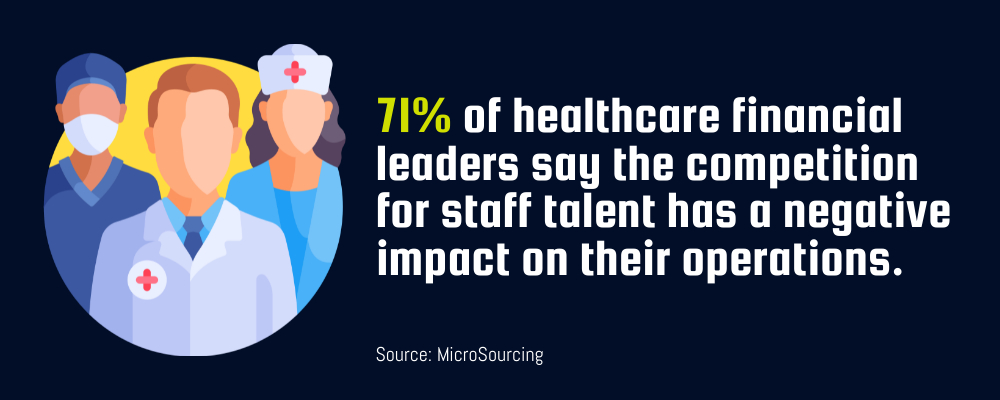
These healthcare outsourcing companies are connected with seasoned professionals and specialists across the global healthcare industry. From basic administrative tasks to complex coding and revenue cycle work, these BPOs hire highly trained individuals to deliver quality service wherever their clients operate.
Strict regulatory compliance
Every company on this list adheres to standards set by global regulatory agencies. They hold HIPAA, ISO, PCI DSS, and other relevant certifications. That compliance infrastructure means you get improved data security, cleaner billing workflows, and a defensible audit trail for your patients and stakeholders.
Better implementation of technologies
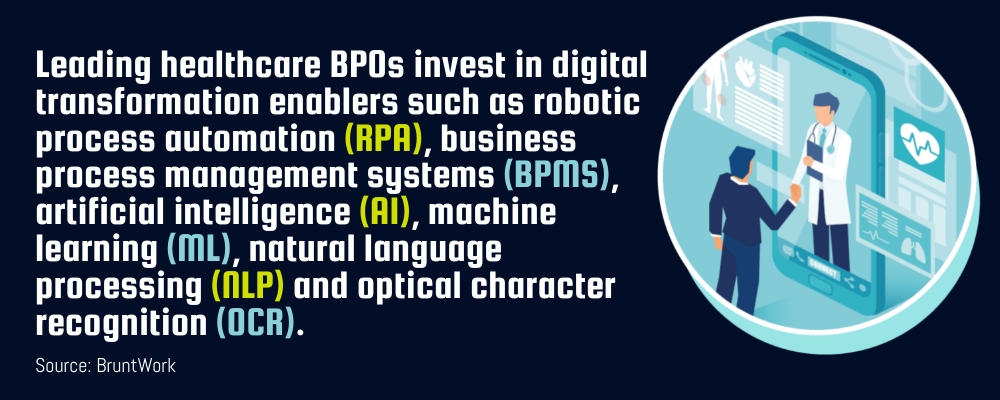
To let healthcare providers focus on core clinical activities, these BPOs specialize in deploying and optimizing purpose-built healthcare technology. Healthcare call center teams use advanced software to manage inbound and outbound patient interactions effectively. The industry is also adopting robotic process automation (RPA) to handle front-office functions such as data management, appointment scheduling, and billing workflows.
Technical expertise and industry experience
All of the BPO companies on this list have extensive outsourcing experience and proven technical expertise in healthcare. BPO firms serve multiple industries, including finance, HR, and technology. But the best healthcare BPOs go deeper than generalist outsourcing: they build teams trained specifically in healthcare terminology, compliance requirements, and patient data protocols.
Healthcare call center outsourcing companies also apply call center best practices to deliver prompt, empathetic patient responses that protect both the patient experience and your organization’s reputation.
The Top 10 Healthcare BPO Companies in the World (2026)
1. Accenture

HQ: Dublin, Ireland | Pricing Tier: Enterprise
No list of top BPO companies is complete without Accenture. This global multinational services company specializes in delivering efficient healthcare services to patients worldwide. Accenture is HIPAA compliant and holds an ISO 14001 certification, making it one of the most trusted BPO companies for large healthcare systems.
Accenture offers healthcare consulting services and solutions that improve client care, address clinical staff shortages, enhance patient engagement, and streamline medical billing processes. The firm uses insight-driven data through Accenture Health Analytics to provide personalized services to healthcare organizations and medical service providers worldwide.

Accenture’s scale and investment in AI-augmented workflows make it a natural fit for large health systems and payers looking to transform operations at enterprise scope. Smaller organizations often find the engagement model more complex than their needs require.
2. GeBBS Healthcare Solutions
HQ: Los Angeles, CA, USA | Pricing Tier: Mid-Market to Enterprise
As one of the top US healthcare outsourcing companies, GeBBS has built an impressive reputation in the American healthcare industry. Healthcare organizations trust GeBBS for its cost-effective solutions that improve service quality and boost revenue. GeBBS focuses on advanced reporting and analytics to sharpen medical data entry and coding accuracy.
GeBBS offers telehealth support services to give organizations better access to electronic medical records (EMR) and easier integration of new patient management software (PMS) into existing systems. Its revenue cycle management (RCM) services help healthcare organizations avoid common financial mistakes and recover revenue that would otherwise be lost to coding errors or claim denials.
GeBBS is a strong fit for US-based healthcare providers that need deep RCM expertise and don’t want to manage an internal coding and billing team.
3. Digital Minds BPO

HQ: Naga City, Philippines | Pricing Tier: SME-Friendly to Mid-Market | Starting from: $924/month per agent
Digital Minds BPO, a Philippine-based business process outsourcing company with over 15 years of experience, is an excellent choice for healthcare outsourcing. What sets Digital Minds BPO apart from most providers on this list is its combination of enterprise-grade compliance, genuine partnership attention, and pricing that makes quality healthcare outsourcing accessible to mid-sized organizations.
Digital Minds BPO specializes in medical claims processing, data entry, and billing services, supported by skilled staff across three dedicated facilities in Naga City and modern healthcare-grade technology. The company is HIPAA compliant, meaning all patient data, business records, and stakeholder information are protected under the required US federal standards for healthcare privacy and security.
The results speak plainly: a 94% client retention rate and an average partnership duration of 4.7 years. Healthcare clients report up to 70% in cost savings compared to building equivalent in-house teams. Agent pricing starts at $924 to $1,764 per month, making Digital Minds BPO one of the most cost-effective options without sacrificing compliance or service quality.
Notable clients include Fortune 500 companies P&G and Petron, as well as the Bureau of Customs. For healthcare organizations that want a responsive, accountable BPO partner rather than a vendor relationship lost inside a large corporation, Digital Minds BPO is worth a close look.
4. Calibrated Healthcare Network
HQ: Ontario, Canada | Pricing Tier: Mid-Market
Calibrated Healthcare Network offers a wide range of services for healthcare providers and brings proven expertise to the outsourcing relationship. It provides 24/7 outsourcing services covering claims processing, medical billing, coding, consulting, and member data management.
In addition to ISO 9001 compliance, Calibrated Healthcare Network holds SOC 1 Type I and SOC 2 Type II data security certifications. These certifications confirm that the company’s internal controls around financial reporting and data security meet independently audited standards. For healthcare clients with strict vendor compliance requirements, this certification stack provides strong assurance.
5. Alorica

HQ: Irvine, CA, USA | Pricing Tier: Enterprise to Mid-Market
For healthcare companies experiencing payment and billing challenges, Alorica is a well-established outsourcing partner. As the largest minority-owned BPO company, Alorica delivers services through constant innovation and close attention to healthcare trends. This BPO specializes in services that benefit healthcare payers, providers, and pharmacy benefit managers. Alorica uses advanced technology for secure payment processing, effective revenue cycle management, and patient engagement across the life sciences.
Alorica is fully PCI and HIPAA compliant. For healthcare organizations that need a large, proven partner specifically for payment processing and member services, Alorica is a reliable choice.
6. ADEC Innovations

HQ: Metro Manila, Philippines | Pricing Tier: Mid-Market
Based in Metro Manila, ADEC Innovations provides global business solutions that are both reliable and environmentally sustainable. It serves multiple industries, with healthcare among its core verticals. ADEC Innovations excels in healthcare data management, records labeling, payroll, staff management, and regulatory compliance support. The company’s primary goal is to help healthcare providers address critical staff shortages while reducing the environmental footprint of major healthcare services.
ADEC Innovations is HIPAA compliant and holds three ISO certifications: ISO 9001, ISO 14001, and ISO 27001. That triple certification is rare among mid-market healthcare BPOs and signals a mature quality and information security management system.
7. Ibex Global Solutions
HQ: Washington, DC, USA | Pricing Tier: Enterprise to Mid-Market
Ibex Global Solutions offers strong payment and billing services with a focus on supporting healthcare practitioners and providers. The company assists healthcare organizations with full-scope payer and pharmacy benefit manager (PBM) solutions, including member enrollment, claims management, billing services, and eligibility verification.
Ibex Global Solutions is HIPAA and PCI compliant, making it a dependable partner for healthcare organizations that handle sensitive financial and patient data. Its experience with payer-side operations gives it a useful perspective that many provider-focused BPOs lack.
8. WNS Global Services
HQ: Mumbai, India | Pricing Tier: Enterprise
WNS is a certified Quality Improvement Organization (QIO) with decades of performance across multiple industries. Its healthcare services allow providers to embrace digital transformation while maintaining operational efficiency. WNS Global Services supports the payer, provider, and telehealth sectors with revenue cycle management, claims processing and management, healthcare analytics, and more.
WNS holds a strong set of certifications: HITRUST, URAC, and NCQA accreditations. For large payers and health plans that require NCQA or URAC accreditation in their vendor network, WNS is one of the few BPOs that can satisfy those requirements.
9. Access Healthcare

HQ: Dallas, TX, USA | Pricing Tier: Mid-Market to Enterprise
Access Healthcare offers focused healthcare process outsourcing, specializing in medical billing, coding, patient scheduling, revenue cycle management, and consultative support. Based in Dallas, it is a leading provider that enhances efficiency for hospitals and large healthcare organizations seeking a single accountable partner across the revenue cycle.
Access Healthcare is committed to consistent service quality, backed by certifications from HITRUST, PCI DSS, SSAE 18 SOC 1 Type 2, ISO 27001:2013, and ISO 9001:2015. That certification stack is among the deepest of any pure-play healthcare BPO on this list.
10. Ubiquity Global Services

HQ: Manila, Philippines | Pricing Tier: Mid-Market
Ubiquity Global Services offers outsourcing solutions across diverse industries. For healthcare outsourcing, Ubiquity focuses on improving patient experiences and optimizing administrative operations. Its healthcare services include data management, wellness programs, member services, provider care, and revenue cycle management.
Ubiquity’s service quality is powered by advanced technology and a skilled workforce. As a Great Place to Work-Certified company, Ubiquity invests in its employees, which translates to lower attrition and more consistent service for healthcare clients.
Company Comparison: Top 10 Healthcare BPO Providers at a Glance
Use this table to quickly compare the 10 companies by location, key services, certifications, and which market segment each serves best.
| Company | HQ | Key Services | Certifications | Pricing Tier |
|---|---|---|---|---|
| Accenture | Dublin, Ireland | Healthcare consulting, analytics, clinical staffing, billing | HIPAA, ISO 14001 | Enterprise |
| GeBBS Healthcare Solutions | Los Angeles, USA | Medical coding, RCM, telehealth, EMR integration | HIPAA | Mid-Market to Enterprise |
| Digital Minds BPO | Naga City, Philippines | Claims processing, medical billing, data entry, customer support | HIPAA | SME-Friendly to Mid-Market |
| Calibrated Healthcare Network | Ontario, Canada | Claims processing, billing, coding, member data management | ISO 9001, SOC 1 Type I, SOC 2 Type II | Mid-Market |
| Alorica | Irvine, USA | Payment processing, RCM, member services, patient engagement | HIPAA, PCI DSS | Enterprise to Mid-Market |
| ADEC Innovations | Metro Manila, Philippines | Data management, records labeling, payroll, compliance support | HIPAA, ISO 9001, ISO 14001, ISO 27001 | Mid-Market |
| Ibex Global Solutions | Washington, DC, USA | Member enrollment, claims management, billing, eligibility verification | HIPAA, PCI DSS | Enterprise to Mid-Market |
| WNS Global Services | Mumbai, India | RCM, claims management, healthcare analytics, telehealth support | HITRUST, URAC, NCQA | Enterprise |
| Access Healthcare | Dallas, USA | Medical billing, coding, patient scheduling, RCM, consulting | HITRUST, PCI DSS, SSAE 18 SOC 1 Type 2, ISO 27001, ISO 9001 | Mid-Market to Enterprise |
| Ubiquity Global Services | Manila, Philippines | Data management, wellness programs, member services, RCM | Great Place to Work Certified | Mid-Market |
What Is HIPAA, and Why Does It Matter for Healthcare BPO?
The Health Insurance Portability and Accountability Act (HIPAA) is US federal legislation that protects the privacy and security of medical information. HIPAA has two core purposes: providing continuous healthcare insurance coverage to workers after job loss, and reducing healthcare administrative costs through standardized electronic data transmission.
HIPAA also aims to reduce fraud and waste in health insurance while improving long-term access to care. For any organization that handles patient health information, HIPAA compliance is not optional. It is a legal requirement with significant financial penalties for violations.
When a healthcare organization contracts with a BPO company, the relationship is governed in part by a Business Associate Agreement (BAA). The BAA is a legally binding contract that requires the BPO (classified as a “Business Associate” under HIPAA) to apply the same data protection standards as the covered healthcare entity. Without a signed BAA, the outsourcing arrangement itself creates regulatory exposure.
Before signing with any healthcare BPO, verify three things: (1) the vendor holds active HIPAA compliance, not just a self-assessment; (2) they are prepared to execute a BAA; and (3) they can describe their internal audit and breach notification procedures. Any hesitation on these points is a meaningful red flag.
How Much Does Healthcare BPO Cost?
Healthcare BPO pricing depends on the services you need, the location of your provider, and the pricing model you choose. Here is the rate range for 2026:
| Location | Typical Hourly Rate | Monthly per Agent (est.) |
|---|---|---|
| US Onshore | $25-$45/hr | $4,000-$7,200+ |
| Offshore (Philippines, India) | $8-$15/hr | $924-$2,400 |
Offshore healthcare BPO delivers the same core compliance credentials and service quality at a fraction of the onshore cost. The Philippines has emerged as the leading destination for English-language healthcare outsourcing, combining lower labor costs with a deep talent pool of healthcare-trained professionals.
Common pricing models in healthcare BPO include:
- Per-agent-hour: You pay for time. Straightforward and predictable for staffing-heavy services like patient support and data entry.
- Per-claim: You pay per claim processed. Works well for high-volume, transaction-based billing and RCM work.
- Percentage-of-collections: The BPO earns a share of the revenue it recovers. Common in RCM and collections-focused engagements.
- Monthly retainer: A fixed fee for a defined scope. Good for predictable, steady-state operations.
- Outcome-based: Pricing tied to specific KPIs, such as claim denial rates or first-pass resolution. Higher risk for the BPO, but aligns incentives well.
For a broader look at how BPO pricing works across models, see our guide to outsourcing pricing models. For context on what the full cost of outsourcing a call center looks like, including setup and overhead, see our breakdown of the cost of outsourcing a call center.
The Philippines Advantage for Healthcare BPO
The Philippines is the world’s leading destination for English-language healthcare BPO. The country’s healthcare BPO sector generates approximately $4.2 billion in annual revenue (Outsource Accelerator), supported by a workforce trained in US healthcare standards, coding systems, and HIPAA requirements.
Filipino healthcare professionals combine strong medical vocabulary, high English proficiency, and cultural familiarity with Western healthcare processes. Agent rates of $8-$15 per hour, compared to $25-$45 onshore, translate directly into the 60-70% cost savings healthcare clients consistently report.
For a deeper look at the best Philippine-based healthcare BPO providers, see our full guide to healthcare BPO companies in the Philippines.
5 Major Benefits of Outsourcing Healthcare Services
Significant cost reductions
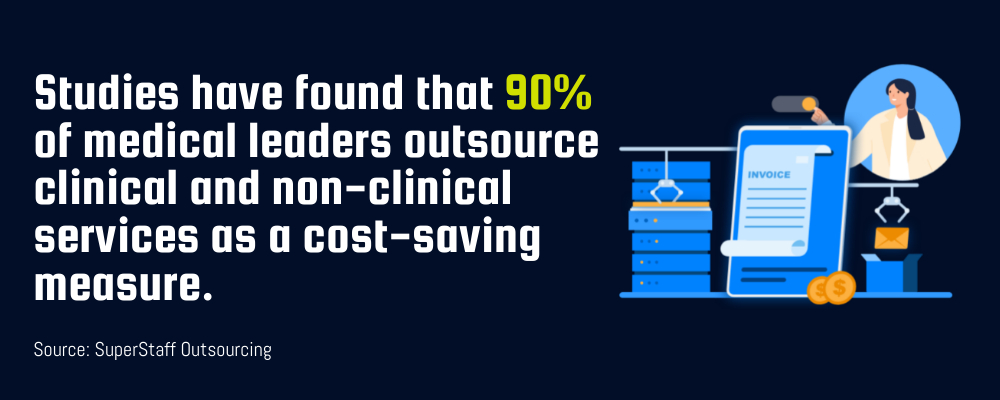
Companies that outsource healthcare functions to third-party providers report cost savings of up to 70 percent compared to equivalent in-house operations. From labor costs to infrastructure and technology, your healthcare outsourcing partner absorbs these expenses. Those savings can be redirected toward improving patient experience and growing revenue.
A globally competitive dedicated workforce
Outsourcing healthcare services to a Filipino BPO company connects you with some of the best healthcare administrative professionals in the industry. The BPO industry maintains deep experience in customer support, data entry, coding, and payment processing. A skilled, dedicated team enhances patient experience and helps your organization stand out in a competitive healthcare market.
Better data security
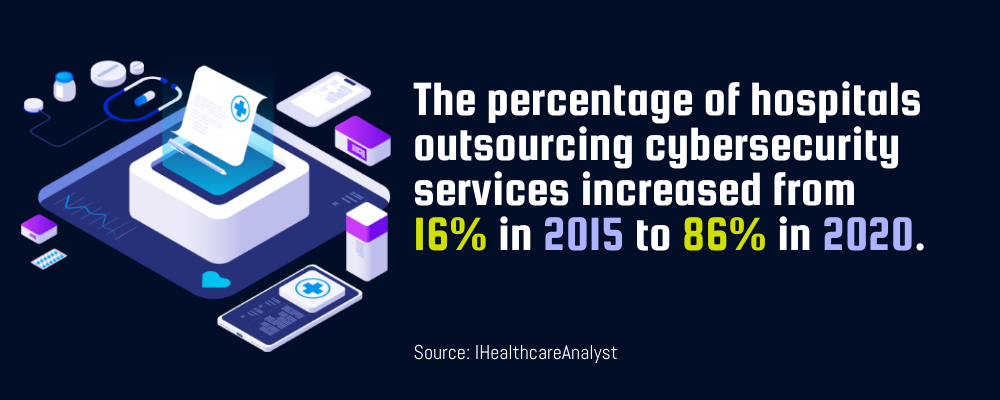
Healthcare services manage large volumes of sensitive patient and business data. Reputable healthcare BPO companies maintain compliance with ISO, HIPAA, PCI DSS, and other relevant data protection standards. These frameworks protect both the organization and its patients in the event of a breach, and the BAA requirement ensures your vendor is legally accountable alongside you.
Access to advanced technologies
Outsourcing healthcare services gives your organization access to technology that would be expensive to procure and maintain independently. This includes purpose-built healthcare call center platforms, RPA tools for claims automation, EMR integration middleware, and analytics dashboards for revenue cycle visibility. For healthcare call centers, BPO companies deploy advanced software to monitor patient calls and manage inquiries with precision.
Enhanced patient engagement
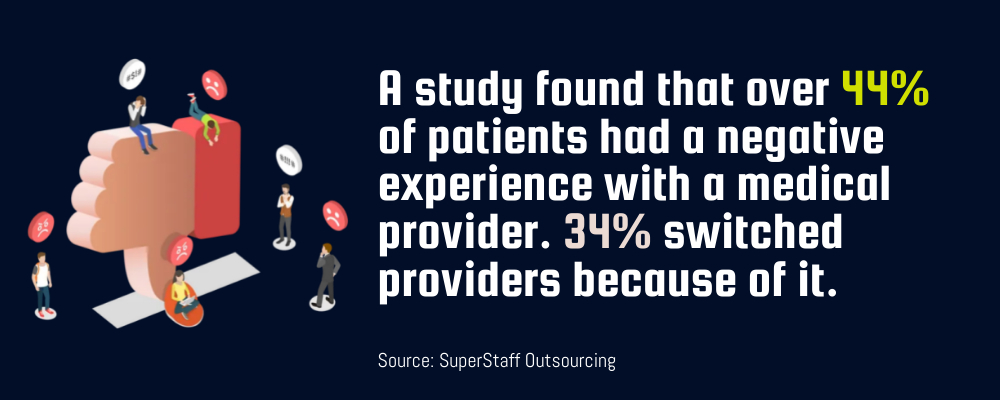
Easy access to patient information improves the patient experience at every touchpoint. When clinical and administrative staff can retrieve records quickly and communicate clearly, patients feel informed and cared for. Transparent communication and convenient access to accurate data build the trust that healthcare organizations depend on.
How to Choose a Healthcare BPO Company
Not every healthcare BPO is built for your organization. Before you sign a contract, evaluate each provider against these criteria:
| Criteria | What to Look For |
|---|---|
| HIPAA Compliance and BAA Readiness | Active HIPAA compliance documentation; willingness to execute a Business Associate Agreement before work begins |
| Relevant Certifications | ISO 27001 (information security), SOC 2 Type II (controls), PCI DSS (payment data), HITRUST (healthcare-specific) |
| Healthcare Domain Experience | Proven experience with your specific service type (coding, RCM, claims, patient support); ask for client references in your specialty |
| Scalability | Capacity to grow your team from 5 to 50+ agents without degrading quality; ask about ramp timelines and facility infrastructure |
| Technology Stack | EMR-compatible systems, CRM integrations, call recording, QA monitoring tools; check compatibility with your existing platforms |
| SLAs and Accountability | Measurable service level agreements for accuracy rates, turnaround times, and uptime; escalation paths and breach notification procedures |
| Attrition Rate | Low agent turnover protects institutional knowledge of your processes; ask for annual attrition figures and how they are managed |
| Cultural and Communication Fit | English proficiency, time zone overlap, communication style alignment; a test project or pilot engagement before full commitment |
Healthcare BPO Trends to Watch in 2026
The healthcare outsourcing landscape is shifting quickly. Here are the four trends most likely to shape your vendor decisions in 2026 and beyond.
AI augmenting human agents, not replacing them
Generative AI in healthcare BPO is growing at an 11.95% CAGR (Mordor Intelligence). The best applications are not replacing agents but making them faster and more accurate: AI-assisted coding suggestions, real-time claim flagging, and intelligent call routing that sends complex or emotionally charged patient cases to experienced human agents. Healthcare organizations benefit most when they select BPO partners that treat AI as an enhancement layer, not a staffing substitute.
The global healthcare worker shortage is accelerating outsourcing
The World Health Organization projects a shortage of 11 million healthcare workers globally by 2030. Administrative staff are already in short supply in most Western markets. Healthcare organizations that attempt to fill every back-office role in-house will find themselves competing in a shrinking labor market at rising costs. Outsourcing non-clinical administrative work is increasingly a workforce sustainability strategy, not just a cost measure.
Telehealth expansion is driving demand for outsourced patient support
Telehealth patient volumes continue to grow following the adoption surge of the previous years. That growth requires contact center capacity for appointment scheduling, follow-up care coordination, and remote patient monitoring support. Healthcare BPO companies with existing telehealth infrastructure and trained agents are well-positioned to absorb this demand without the capital investment required to build it internally.
Data security expectations are rising across the supply chain
Regulatory bodies are scrutinizing the full vendor supply chain, not just the covered entity. Healthcare organizations are facing pressure to audit and document the security posture of every Business Associate, including their BPO partners. This is raising the floor for acceptable compliance documentation and pushing more healthcare buyers toward vendors that hold independent third-party certifications like HITRUST, SOC 2 Type II, and ISO 27001.
Outsource to Digital Minds BPO for Reliable Healthcare Solutions
Outsourcing important healthcare functions to a reliable partner can transform your organization’s operational capacity. Digital Minds BPO, a Philippine-based BPO with over 15 years of experience and a 94% client retention rate, helps healthcare organizations deliver better patient experiences while reducing administrative costs by up to 70%.
Digital Minds BPO is HIPAA compliant and ready to execute a Business Associate Agreement. Across three dedicated facilities in Naga City, Philippines, a team of skilled agents handles medical claims processing, data entry, billing support, and patient communications with the consistency your patients expect. Pricing starts at $924 to $1,764 per month per agent, making enterprise-grade healthcare BPO accessible at mid-market scale.
Whether you need to start with a focused pilot or build a team of 20+ agents, Digital Minds BPO offers the accountability and flexibility that larger BPOs rarely extend to mid-sized healthcare clients. Explore our services and reach out to start the conversation.
Frequently Asked Questions
What is healthcare BPO?
Healthcare BPO, or healthcare business process outsourcing, is the practice of contracting non-core medical and administrative functions to a specialized third-party service provider. Common outsourced functions include medical billing, claims processing, medical transcription, data entry, revenue cycle management, and patient support. Healthcare BPO companies supply the trained staff, compliance infrastructure, and technology that healthcare organizations need to run these processes efficiently without building every capability in-house.
What services can be outsourced to a healthcare BPO?
Healthcare BPO companies handle a wide range of both clinical support and administrative services. Common examples include medical billing and coding, insurance claims processing, medical transcription, healthcare data entry, patient scheduling, revenue cycle management (RCM), healthcare data analytics, telehealth support, member services, and healthcare call center operations. Providers typically do not outsource direct clinical care, but nearly all administrative and back-office functions can be delegated to a qualified BPO partner.
How do healthcare BPO companies ensure HIPAA compliance?
HIPAA-compliant healthcare BPO companies implement administrative, physical, and technical safeguards that mirror the requirements placed on covered healthcare entities. This includes encrypted data transmission, access controls, audit logging, background-checked staff, and regular internal security reviews. Before any work begins, a compliant BPO will execute a Business Associate Agreement (BAA) with the healthcare client. The BAA is a legally binding contract that defines the BPO’s obligations to protect protected health information (PHI) under HIPAA. If a vendor is unwilling to sign a BAA, that is a serious compliance red flag.
How much does healthcare BPO cost?
Healthcare BPO costs vary by location, service type, and pricing model. US onshore healthcare BPO typically runs $25-$45 per hour, or $4,000-$7,200+ per agent per month. Offshore healthcare BPO in the Philippines or India runs $8-$15 per hour, or approximately $924-$2,400 per agent per month. Pricing models include per-agent-hour, per-claim, percentage-of-collections, monthly retainer, and outcome-based arrangements. Most healthcare organizations report cost savings of 60-70% when shifting from in-house to offshore BPO for administrative functions.
What is the difference between a healthcare BPO and a healthcare call center?
A healthcare call center is a subset of healthcare BPO. Call centers focus specifically on voice and digital patient communication: inbound scheduling, outbound follow-up, nurse triage lines, and member services. A healthcare BPO provides a broader suite of services that often includes back-office functions like medical coding, claims processing, data entry, and revenue cycle management, in addition to contact center operations. Many healthcare BPOs offer both, allowing a single partner to cover both patient-facing and administrative outsourcing needs.
How do I choose the right healthcare BPO company?
Start with HIPAA compliance and BAA readiness, which are non-negotiable. Then evaluate certifications relevant to your service type (ISO 27001, SOC 2 Type II, HITRUST, PCI DSS), the vendor’s specific experience in your area of need (billing, coding, RCM, or patient support), their scalability, technology stack compatibility, and their contractual SLAs for accuracy and turnaround. Ask for client references from healthcare organizations similar to yours. A pilot engagement of 60-90 days before full commitment gives you real-world data on performance without locking in prematurely.
What are the benefits of outsourcing healthcare work to the Philippines?
The Philippines offers a uniquely strong combination of cost efficiency, English proficiency, and healthcare domain expertise. Filipino healthcare professionals are trained in US coding standards (ICD, CPT, HCPCS), HIPAA compliance, and Western healthcare administrative workflows. Hourly rates of $8-$15 represent 60-70% savings over equivalent US onshore staffing. The Philippines healthcare BPO sector generates approximately $4.2 billion annually (Outsource Accelerator), reflecting the scale and maturity of the industry. Cultural alignment with US and Australian healthcare practices also reduces the communication friction that can affect quality in other offshore destinations.
How does agent attrition affect healthcare BPO quality?
High agent attrition is one of the most underrated risks in healthcare BPO. Healthcare administrative work requires agents to learn your specific systems, your payer mix, your coding conventions, and your compliance protocols. Every time an agent leaves and a new one is onboarded, there is a period of reduced accuracy and slower throughput. Providers with high attrition pass that instability directly to your operations. When evaluating healthcare BPO partners, ask for annual attrition figures and look for partners that invest in staff tenure through compensation, career development, and workplace culture. Digital Minds BPO’s 4.7-year average client partnership duration reflects, in part, the staff stability that consistent client relationships require.

Charvel Rebagay is the CEO and Founder of Digital Minds BPO, a Philippines-based outsourcing company he established in 2010. Based in Naga City, he works directly with clients and teams daily to ensure service quality across every engagement. With over 15 years of experience building and managing dedicated teams for businesses worldwide, Charvel has helped hundreds of companies scale their operations through skilled Filipino professionals. Under his leadership, Digital Minds BPO operates 3 dedicated facilities with a 94% client retention rate, serving Fortune 500 clients including P&G and Petron.