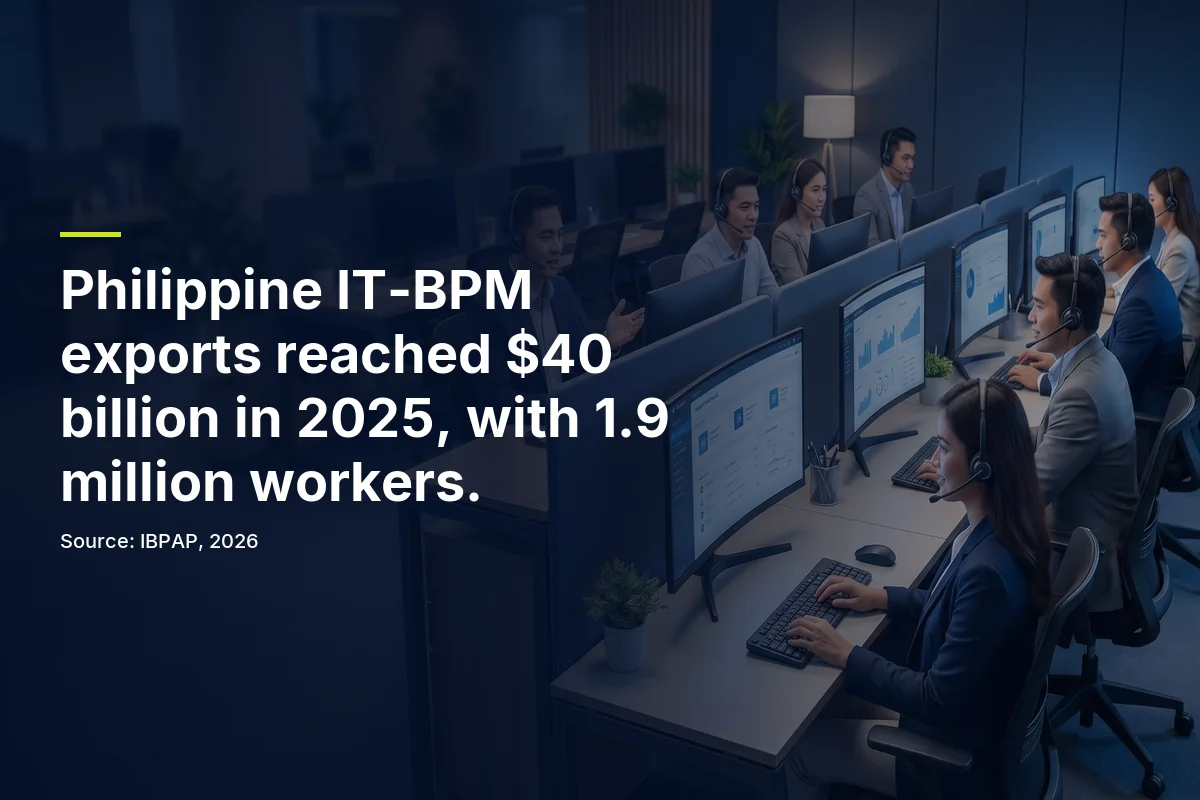
Customer service outsourcing in the Philippines is now a standard strategy for growing companies across the US, UK, and Australia, not a workaround. IBPAP, the industry association for the Philippine IT-BPM sector, reported $40 billion in export revenue and 1.9 million workers in 2025, with projections reaching $42 billion in 2026. These are not freelancer platforms or informal arrangements. Most of that output comes from managed BPO facilities delivering structured, office-based customer service at scale.
This roundup covers the leading providers delivering customer service from the Philippines: ten enterprise-scale operators whose contracts, minimums, and pricing structures are built for large organizational buyers, plus Digital Minds BPO, built specifically for growing companies. Every entry is profiled under the same criteria: service model, compliance posture, scale, pricing signal, and an honest assessment. The order below is a curated sequence, not a performance ranking. We have placed Digital Minds BPO within the list rather than at the top, because a roundup that ranks its own author first is exactly the pattern this post is written to avoid.
One thing none of the competing roundups on this topic disclose: the providers on most lists are not interchangeable. A managed BPO, a staff leasing firm, and a VA platform are three different operating models with different accountability structures, cost floors, and risk profiles. This post names the model type for each provider so buyers can compare like with like before shortlisting.
What Are the Top Customer Service Outsourcing Companies in the Philippines?
The top customer service outsourcing companies in the Philippines for 2026 include Teleperformance Philippines, Concentrix Philippines, Foundever, Digital Minds BPO, Alorica Philippines, TELUS Digital, Sutherland, TaskUs, iQor, VXI Global Solutions, and ibex. All eleven deliver customer service from Philippine facilities; they differ sharply in operating model, minimum scale, compliance posture, and client profile. The methodology section below explains how these providers were selected and what each criterion means in practice.
How We Evaluated These Companies
Every provider on this list was assessed against seven criteria. The table below defines each one. These criteria map directly to the questions a buyer should ask any Philippine BPO in a shortlisting call. A provider that cannot answer clearly on any of these seven points warrants deeper scrutiny before signing.
| Criterion | What It Measures |
|---|---|
| Service-model clarity | Is this a managed BPO (provider owns staffing, management, QA), a staff leasing / EOR arrangement (client manages, provider supplies headcount), or a VA platform (individual freelancers matched to clients)? These are different products with different accountability structures. |
| Compliance & certifications | Publicly documented or credibly reported certifications: HIPAA, GDPR, PCI-DSS, ISO 27001. Unverified self-reports are flagged as such. |
| Scalability | Minimum viable team size, maximum single-client capacity, and whether scaling is handled through dedicated facilities or shared-seat pools. |
| Retention & attrition | Published or verifiable client retention rate and, where available, agent attrition rate. Industry consensus places Philippine BPO agent attrition at 6% to 8% per month; ask any provider for their actual number. |
| Industry specialization | Whether the provider has documented client history in your specific vertical (healthcare, ecommerce, financial services, SaaS, etc.). |
| Pricing transparency | Whether per-agent monthly pricing is publicly stated or available on request. Providers with public pricing signal confidence; providers that withhold all pricing until discovery require more due diligence. |
| Office infrastructure / BCP | Number of facilities, redundancy in power and internet, and whether agents work on-site (business continuity advantage) or from home. |
The Top Customer Service Outsourcing Companies in the Philippines for 2026
The 11 providers below are presented as a curated list, not a strict ranking by size or quality; the right provider for you depends entirely on your team’s requirements. Each entry follows the same structure: model type, best-fit client, compliance, scale, pricing signal, and an honest profile. A footnote below the list distinguishes the managed BPO model from the staff leasing and VA platform models that some buyers conflate with it.
Teleperformance Philippines
Best for: Large enterprises requiring multi-market, multilingual customer operations at significant scale.
Model: Managed BPO | HQ: Paris, France (Philippine delivery from Metro Manila and Cebu) | Founded: 1978 (PH operations since 1996) | Scale: 400,000+ agents globally; Philippine headcount reported at 45,000+
Compliance: Reports ISO 27001, PCI-DSS, HIPAA, and GDPR alignment across delivery centers. Specific certification scope by facility varies; verify during contracting.
Pricing signal: Not publicly stated. Enterprise contract minimums typically in the hundreds of seats.
Teleperformance is the largest BPO provider in the world by headcount. Philippine delivery is a major part of their global operations, serving clients across financial services, technology, healthcare, and retail. Buyers choosing Teleperformance get proven at-scale infrastructure and multilingual capability. The trade-off: smaller companies often report limited attention and slower responsiveness compared to working with a mid-market or regional provider. Fit is most reliable for companies that need 200+ seats and have a dedicated vendor management function.
Concentrix Philippines
Best for: Technology companies and enterprises seeking integrated CX, analytics, and back-office operations.
Model: Managed BPO | HQ: Fremont, California (Philippine delivery from Metro Manila and provincial hubs) | Founded: 1983 | Scale: 300,000+ agents globally
Compliance: Reports ISO 27001, PCI-DSS, HIPAA-ready practices, and GDPR frameworks. Verify site-specific certification coverage.
Pricing signal: Enterprise pricing only; not publicly disclosed. Concentrix acquired Webhelp in 2023, expanding European delivery alongside its Philippine operations.
Concentrix competes directly with Teleperformance for large enterprise customer operations. Their Philippines delivery centers are well-established, with a strong footprint in Metro Manila. Their CX analytics and workforce management tooling are a differentiator for clients that want data-backed performance reporting at scale. Like Teleperformance, the model is oriented toward enterprise contracts; growing companies under 100 seats will generally find a better fit elsewhere.
Foundever
Best for: Mid-to-large enterprises in telecom, financial services, and technology seeking omnichannel CX delivery.
Model: Managed BPO | HQ: Luxembourg (Philippine delivery from Manila) | Founded: 2023 (formed via merger of SYKES and Sitel) | Scale: 170,000+ agents globally
Compliance: Reports ISO 27001 and PCI-DSS across primary delivery centers. HIPAA alignment available for healthcare accounts. Verify scope by site.
Pricing signal: Not publicly disclosed. Enterprise contract structure.
Foundever was formed from the 2023 merger of SYKES and Sitel, both of which had long-standing Philippine delivery operations. The combined entity has significant Manila presence and serves clients across financial services, telecom, and technology. The merger integration period introduced some account management transitions; buyers contracting now should verify account team continuity during the sales process. Foundever is a reasonable enterprise-tier choice where the SYKES or Sitel relationship was already established.
Digital Minds BPO
Best for: SMBs and mid-market companies (typically $2M to $50M revenue, 10 to 200 employees) that want a dedicated, managed, office-based customer service team with transparent published pricing and a genuine long-term partnership structure. The accessible alternative to the enterprise providers on this list.
Model: Managed BPO | HQ: Naga City, Philippines | Founded: 2010 | Scale: 3 dedicated facilities in Naga City; proven capacity to build single-client teams of 50 to 100+ agents
Compliance: HIPAA (privacy and security training), GDPR, Philippines Data Privacy Act, TCPA. Operates from office-based, secured facilities with dedicated IT infrastructure per client team.
Pricing signal: Published. Entry-level voice agents: $1,092/month. Entry-level non-voice (email, chat, back office): $924/month. No recruitment fees, no setup fees. Team Leader and Project Manager included in all engagements.
Digital Minds BPO, a Philippine-based business process outsourcing company founded in 2010, operates from three Naga City facilities and has served clients across the US, UK, and Australia for 15+ years. The Naga City location sits outside the Metro Manila talent market, which keeps agent attrition lower and operating costs below Manila equivalents. The client retention rate is 94%, with an average partnership of 4.7 years; these are the figures most meaningful to a buyer evaluating long-term fit rather than a quarterly cost comparison. Notable clients include Fortune 500 companies P&G and Petron, and the Bureau of Customs, included here as proof of operational credibility rather than as a signal that this is an enterprise-only provider. The published pricing distinguishes Digital Minds BPO from every other entry on this list: buyers can evaluate cost before a discovery call, not after. Engagements start with a 3-month pilot, no long-term commitment required, and dedicated phone support and live chat support are both available from the same facilities.
Alorica Philippines
Best for: Mid-to-large enterprises in healthcare, financial services, and retail seeking a US-headquartered provider with substantial Philippine delivery capacity.
Model: Managed BPO | HQ: Irvine, California | Founded: 1999 | Scale: 100,000+ agents globally; Philippines is a primary delivery market
Compliance: Reports HIPAA, PCI-DSS, and ISO 27001 across key delivery centers. Verify by site and program.
Pricing signal: Not publicly disclosed. Enterprise pricing model.
Alorica is one of the US-headquartered BPO providers with the largest Philippine footprint. Their delivery network in the Philippines spans Metro Manila, Cebu, Davao, and other regional locations, which gives them geographic redundancy that purely Metro Manila-concentrated providers cannot match. For US clients, the domestic headquarters structure means US-timezone account management, which some buyers prefer for escalation and governance. Minimum seat expectations are consistent with enterprise-tier providers.
TELUS Digital
Best for: Technology companies seeking integrated AI-enhanced CX, trust and safety, and digital transformation services.
Model: Managed BPO | HQ: Vancouver, Canada | Founded: 2005 (formerly TELUS International) | Scale: 75,000+ team members globally; Philippines is a major delivery hub
Compliance: Reports ISO 27001, SOC 2 Type II, PCI-DSS, and HIPAA frameworks. Verify by program and delivery site.
Pricing signal: Not publicly disclosed. Mid-to-large enterprise contract structure.
TELUS Digital (formerly TELUS International) is publicly traded on the NYSE and TSX and is notable for its emphasis on AI-integrated service delivery, positioning human agents alongside AI tools rather than as a separate operation. Their Philippine delivery centers are concentrated in Manila. TELUS Digital is a credible choice for technology-native companies that want a provider actively investing in AI-assisted service delivery rather than treating it as a future roadmap item.
Sutherland
Best for: Enterprises in financial services, healthcare, and technology seeking process-intensive CX and back-office operations.
Model: Managed BPO | HQ: Rochester, New York | Founded: 1986 | Scale: 60,000+ employees globally; Philippine delivery from Manila and Cebu
Compliance: Reports HIPAA, PCI-DSS, ISO 27001, and SOC 2 Type II across primary delivery centers. Verify scope by engagement.
Pricing signal: Not publicly disclosed. Enterprise contract structure.

Sutherland has operated in the Philippines for over two decades and maintains delivery centers in Manila and Cebu. Their client base skews toward regulated industries: financial services, healthcare, and insurance. The process depth in these verticals is a genuine differentiator; if your customer service operation involves complex workflows tied to claims, accounts, or compliance-heavy interactions, Sutherland’s domain experience is worth including in any enterprise shortlist. Minimum engagement expectations are consistent with other providers at this scale.
TaskUs
Best for: High-growth technology companies, digital platforms, and startups requiring trust-and-safety, content moderation, and CX with rapid scaling capability.
Model: Managed BPO | HQ: New Braunfels, Texas | Founded: 2008 | Scale: 47,000+ agents globally; Philippines is primary delivery market
Compliance: Reports ISO 27001 and SOC 2 Type II for relevant service lines. Verify scope by program.
Pricing signal: Not publicly disclosed. Pricing is program-structured; newer clients typically start at 30 to 50 seats.
TaskUs has built its reputation serving US technology companies: digital platforms, fintech, and gig-economy operators. The Philippines is their largest delivery market, and they have a strong pipeline of tech-native talent in Manila and Cavite. Their trust-and-safety and AI data operations are where most of their press coverage originates, but traditional customer service is a significant part of their delivery. The minimum engagement size and pricing model favor well-funded startups and growth-stage tech companies more than B2B service firms.
iQor
Best for: Enterprise brands needing very large-scale Philippine delivery; strong in telecom, utilities, consumer electronics, and healthcare.
Model: Managed BPO | HQ: Fort Lauderdale, Florida (Philippine regional HQ in BGC, Taguig) | Founded: 1998 | Scale: ~45,000 globally; 32,000+ in the Philippines across 16 contact center sites
Compliance: Reports SOC 1 Type II, SOC 2 Type II, PCI-DSS v4.0, ISO 27001:2022, HITRUST, and HIPAA compliance.
Pricing signal: Not publicly disclosed. Custom enterprise contracts only.
iQor is one of the most Philippine-concentrated enterprise BPOs on this list: 32,000 of its approximately 45,000 global staff work from Philippine facilities spanning Metro Manila, Cebu, Davao, and several regional cities. That concentration gives buyers who specifically want Philippine delivery a provider whose operational center of gravity matches the preference. The company’s proprietary analytics and workforce optimization platform, infinityAiQ, is its differentiator for enterprise accounts that want performance data alongside headcount. iQor was named a Philippines Best Employer for 2026, a signal worth weighing in markets where agent attrition is a recurring concern. Enterprise contract pricing only; no accessible tier for smaller buyers.
VXI Global Solutions
Best for: Enterprise and Fortune 500 brands needing omnichannel CX, multilingual support, and embedded AI tooling at scale.
Model: Managed BPO | HQ: Los Angeles, California | Founded: 1998 | Scale: 40,000+ across 43 locations; 7 Philippine sites (Makati, Pasay, Quezon City, Clark, Davao)

Compliance: Reports SOC 2 Type II; maintains compliance processes aligned with PCI-DSS, ISO 27001, and HIPAA. Note: only SOC 2 is independently confirmed from public sources; the remaining three are described by the company as aligned practices rather than separately certified.
Pricing signal: Not publicly disclosed. Custom enterprise contracts only.
VXI operates across telecom, financial services, retail, and technology, with seven Philippine delivery sites concentrated in Metro Manila and Clark. Their proprietary performance tooling, Talent Match Pro and Performance Pro 360, is positioned as a differentiator for enterprise accounts that want structured talent selection and agent performance management baked into the engagement. At 40,000 employees across 43 locations, VXI sits in the mid-tier of enterprise BPOs by global scale, large enough for Fortune 500 volume commitments, not so large that account management becomes purely transactional. Enterprise contract pricing only; no public rate tier.
ibex
Best for: Enterprise and upper-mid-market brands in retail, ecommerce, healthcare, fintech, and travel that value investor-grade transparency.
Model: Managed BPO | HQ: Washington, D.C. | Founded: 2002 | Scale: 31,000 to 36,000 globally; 15,000+ in the Philippines across 9 facilities (Metro Manila, Davao, Tagbilaran)
Compliance: Reports ISO 27001, SOC 2 Type II, HITRUST, and PCI-DSS; earned ISO/IEC 42001 (AI governance) in 2025, still rare across the BPO category.
Pricing signal: Not publicly disclosed. Custom enterprise contracts only.
ibex is one of the few publicly traded pure-play CX outsourcers with a large Philippine footprint, listed on NASDAQ under the ticker IBEX. That public-company status means SEC filings, audited financials, and quarterly earnings calls, which gives compliance-sensitive buyers a level of financial transparency that private BPOs cannot match. Their 9 Philippine facilities span Metro Manila, Davao, and Tagbilaran, and the company was named Philippine Airlines’ Contact Center Partner of the Year in 2024. The ISO/IEC 42001 AI governance certification, earned in 2025, is a notable differentiator for buyers evaluating AI-integrated service delivery. Enterprise contract pricing only.
Note: This list covers managed BPO providers delivering customer service from Philippine facilities. VA platforms (Onlinejobs.ph, VirtualStaff.ph) and pure EOR/staff leasing firms operating without a managed service layer are excluded. Those are different products; buyers who want to retain full direct management of their agents should evaluate them separately from managed BPOs.
Quick Comparison Table
| Company | HQ | Best For | Scale | Compliance (reported) |
|---|---|---|---|---|
| Teleperformance Philippines | Paris / Manila & Cebu delivery | Large enterprise, multilingual, multi-market | 45,000+ PH agents | ISO 27001, PCI-DSS, HIPAA, GDPR |
| Concentrix Philippines | Fremont, CA / Manila delivery | Enterprise CX, analytics, back-office | 300,000+ globally | ISO 27001, PCI-DSS, HIPAA-ready |
| Foundever | Luxembourg / Manila delivery | Enterprise telecom, financial services, tech | 170,000+ globally | ISO 27001, PCI-DSS, HIPAA |
| Digital Minds BPO | Naga City, Philippines | SMBs and mid-market; transparent pricing; dedicated managed teams | 3 facilities; 50 to 100+ per client | HIPAA, GDPR, PH Data Privacy Act, TCPA |
| Alorica Philippines | Irvine, CA / Manila, Cebu, Davao delivery | Mid-large enterprise, healthcare, retail | 100,000+ globally | HIPAA, PCI-DSS, ISO 27001 |
| TELUS Digital | Vancouver / Manila delivery | Tech companies, AI-enhanced CX | 75,000+ globally | ISO 27001, SOC 2 Type II, PCI-DSS, HIPAA |
| Sutherland | Rochester, NY / Manila & Cebu delivery | Enterprise financial services, healthcare, tech | 60,000+ globally | HIPAA, PCI-DSS, ISO 27001, SOC 2 Type II |
| TaskUs | New Braunfels, TX / Manila delivery | High-growth tech, trust & safety, CX | 47,000+ globally | ISO 27001, SOC 2 Type II |
| iQor | Fort Lauderdale, FL / BGC Taguig PH HQ | Enterprise telecom, utilities, consumer electronics, healthcare | 32,000+ PH agents; 45,000 globally | SOC 1 & 2 Type II, PCI-DSS v4.0, ISO 27001:2022, HITRUST, HIPAA |
| VXI Global Solutions | Los Angeles, CA / 7 PH sites | Enterprise omnichannel CX, multilingual, AI tooling | 40,000+ globally | SOC 2 Type II; aligned with PCI-DSS, ISO 27001, HIPAA |
| ibex | Washington, D.C. / Manila, Davao, Tagbilaran | Enterprise retail, ecommerce, healthcare, fintech, travel | 15,000+ PH agents; 31,000 to 36,000 globally | ISO 27001, SOC 2 Type II, HITRUST, PCI-DSS, ISO/IEC 42001 |
Why Companies Outsource Customer Service to the Philippines
The reasons companies move customer service operations to the Philippines have shifted over the past decade. Deloitte’s 2024 Global Outsourcing Survey found that only 34% of executives now cite cost reduction as their primary outsourcing driver, down from roughly 70% in 2020. Talent access now leads at 42% of respondents. The Philippines is the clearest expression of that shift: the country’s BPO sector produces 1.9 million workers who have grown up in a customer service delivery culture, not just a wage arbitrage pool.
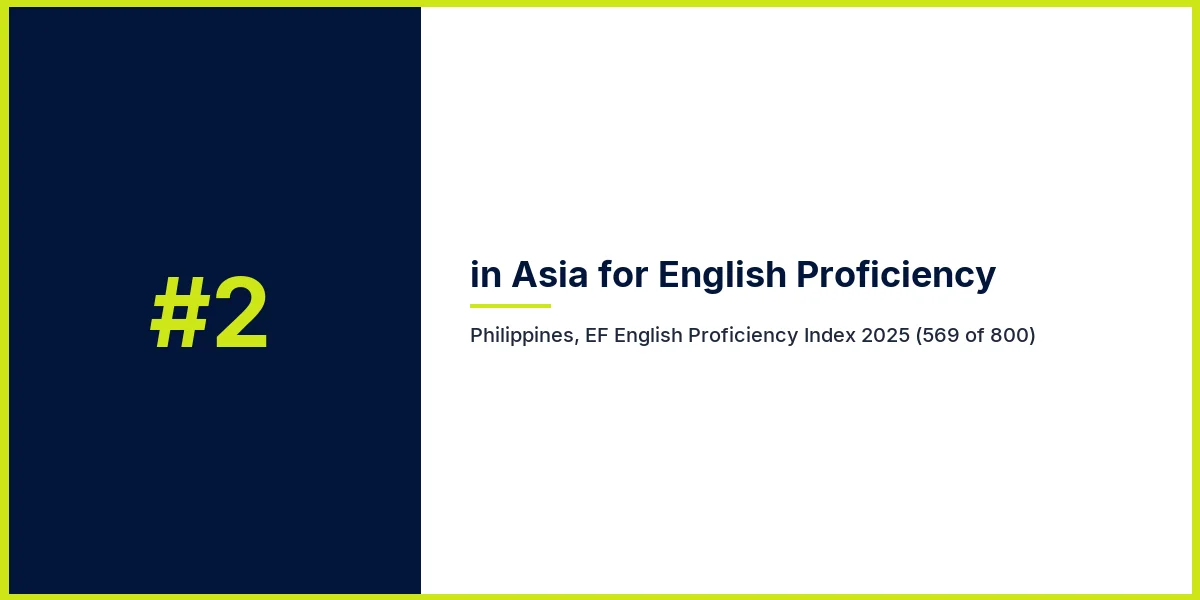
The EF English Proficiency Index 2025 ranked the Philippines second in Asia for English proficiency, with a score of 569/800. Combined with a cultural familiarity with US consumer expectations, this produces agents who can handle complex, multi-turn customer interactions without the friction that hampers some other offshore markets. The cost economics remain real: a fully-loaded customer service agent in the US runs $4,000 to $5,000 per month including employer taxes, benefits, and overhead. A comparable managed BPO agent in the Philippines, per Digital Minds BPO’s published rates and US Bureau of Labor Statistics data for 2026, starts at $924 to $1,092 per month. The gap is significant; what has changed is that buyers increasingly describe access to stable, trained talent as the reason they stay, not just the reason they started.
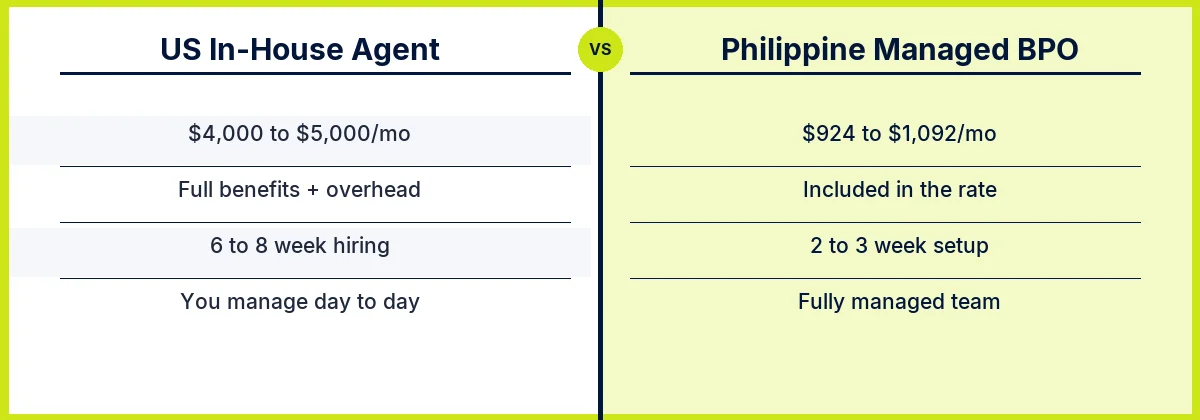
For context on how the Philippine BPO industry fits into broader outsourcing patterns, see our outsourcing statistics post with sourced global data.
How to Choose the Right Customer Service Outsourcing Partner
The seven criteria in the methodology table map directly to the questions worth asking in any shortlisting call. A condensed checklist for buyers:
- Confirm the service model explicitly. Ask: “Is this a managed BPO engagement or a staff leasing arrangement?” The answer changes who holds accountability for performance.
- Request compliance documentation, not just claims. For HIPAA, ask for evidence of annual training completion and documented Business Associate Agreement terms. For ISO 27001, ask for the certification scope and expiry date.
- Ask for agent attrition numbers, not CSAT scores. A provider’s CSAT figure is self-reported and varies by how it is measured. Monthly agent attrition (industry benchmark: 6% to 8% in Philippine BPO) is a more objective signal of team stability. Ask for the actual number and compare it to the benchmark.
- Verify minimum seat requirements before a long discovery process. Several providers on this list have minimums of 100+ seats. If your immediate need is 5 to 15 agents, confirm upfront that the provider works at that scale before investing in extended due diligence.
- Ask about facility count and BCP. A provider operating from one building in one city carries infrastructure risk that a multi-facility provider does not. For critical customer service functions, business continuity planning is worth verifying, not assuming.
- Look for public pricing or a clear pricing process. Providers that publish pricing or give transparent ranges early in discovery are signaling confidence in their value. Providers that withhold all cost information until a late-stage call may be qualifying budget before revealing price.
For a broader look at how the pros and cons of different outsourcing approaches compare, see our post on the pros and cons of outsourcing customer service. If you’re comparing this Philippines-specific list against a global provider roundup, we maintain a broader global roundup of customer service outsourcing companies as a companion resource.
Find the Right Customer Service Partner
The list above covers eleven providers spanning the full range of scale and specialization available in Philippine customer service outsourcing. Large enterprises with 200+ seat requirements and dedicated vendor management teams will find the most flexibility with Teleperformance, Concentrix, or Alorica. Technology companies looking for a provider actively investing in AI-assisted delivery should look at TELUS Digital and TaskUs. Companies that need significant Philippine concentration and enterprise-grade compliance depth should consider iQor, VXI Global Solutions, or ibex. SMBs and mid-market companies needing a dedicated, managed, office-based team with transparent, published pricing and long-term partnership accountability will find that profile in Digital Minds BPO: the only provider on this list that publishes per-agent rates, includes a Team Leader and Project Manager in every engagement, and builds from a 3-month pilot with no long-term commitment required.
For further reading on how Philippine providers compare in a wider global context, the top BPO companies in the Philippines post covers the broader outsourcing industry beyond customer service. The top call center companies in the Philippines post is the closest companion post for voice-specific requirements.
Frequently Asked Questions
How much does it cost to outsource customer service to the Philippines?
Costs vary by provider type, agent tier, and whether the pricing is per-seat or per-hour. For managed BPO providers with published pricing, entry-level non-voice agents (email, chat) typically start at $900 to $1,200 per month per agent. Voice agents (phone support) run slightly higher, around $1,092 to $1,400 per month at entry level. Enterprise providers (Teleperformance, Concentrix, Alorica) do not publish rates; pricing is negotiated by contract and scales with seat count. For comparison, a fully-loaded US customer service agent costs $4,000 to $5,000 per month including benefits and overhead, based on US Bureau of Labor Statistics 2026 data. The 60% to 79% cost gap is real, though the useful comparison is total program cost, not per-agent rate alone.
Why do companies outsource customer service to the Philippines?
Three factors drive the decision consistently: English proficiency, cultural alignment with US consumer expectations, and a mature BPO labor market that produces trained customer service talent at scale. Deloitte’s 2024 Global Outsourcing Survey found that talent access now ranks as the top outsourcing driver for 42% of executives, ahead of cost reduction. The Philippines has delivered customer service for US companies since the late 1990s; the institutional knowledge built into the workforce over those decades is not easily replicated elsewhere. Cost savings of 60% to 70% versus US hiring remain a real factor, but most buyers who stick with Philippine BPOs for 3+ years cite team quality and stability as the primary reason they stay. For context on the market’s scale: Grand View Research valued the global outsourced customer care market at $77.12 billion in 2024 and projects it to reach $113.18 billion by 2030, at a 6.6% CAGR. The Philippines captures a significant share of that delivery.
Philippines vs. India for customer service outsourcing: which is better?
Both countries are legitimate customer service outsourcing destinations, but they serve different buyer profiles. The Philippines has a stronger track record for US-market voice support: the accent is more neutral to American ears, and the cultural reference set (entertainment, sports, consumer culture) overlaps more directly with US customers. India has a larger talent pool and stronger depth in technical support, IT help desk, and back-office processing. For companies whose customer service involves complex technical troubleshooting or large-scale back-office operations, India often has more specialized providers. For US companies needing primarily voice-based customer support with strong English communication and low accent friction, the Philippines is the more common choice. Many large enterprises split delivery between both markets.
What is the difference between a managed BPO and staff leasing in the Philippines?
In a managed BPO engagement, the provider owns the full delivery operation: recruiting, training, management, quality assurance, and performance accountability. The buyer defines the outcomes; the provider handles everything required to deliver them. In staff leasing (also called EOR or seat leasing), the provider supplies vetted workers and physical infrastructure, but the buyer takes direct management responsibility for daily operations, training, and performance. The cost floor for staff leasing is often lower, but the operational overhead for the buyer is markedly higher. For companies without a dedicated offshore operations manager, managed BPO is typically the more reliable starting point. Every provider on this list operates a managed BPO model. If you specifically want a staff leasing or seat-leasing arrangement, you would evaluate a different set of providers.
What certifications should a Philippine customer service BPO have?
The answer depends on your industry. For healthcare-adjacent operations (medical billing, patient support, insurance): HIPAA compliance with documented annual training and a signed Business Associate Agreement. For payment processing: PCI-DSS certification for the specific delivery site handling cardholder data. For operations serving EU customers: GDPR data processing protocols and a Data Processing Agreement. For general data security assurance: ISO 27001 certification is the most widely recognized standard. Ask for the certification scope and expiry date, not just a claim; certification can cover a holding company without covering the specific facility your agents work from. For Philippine-specific requirements, the Philippines Data Privacy Act (RA 10173) applies to all personal data of Philippine citizens processed by BPO operators.
What is the typical agent attrition rate in Philippine call centers?
Industry consensus places monthly agent attrition in Philippine BPOs at 6% to 8% per month for metro-based providers. This is higher than many buyers expect. At 6% monthly attrition, roughly 72% of a team could turn over in a year, though in practice the distribution is not uniform: high-attrition months typically follow contract renewal cycles. Provincial delivery (Cebu, Davao, Naga City) tends to show lower attrition than Metro Manila because the talent pool is less contested and agents have fewer competing employment options. When evaluating providers, ask for their 12-month trailing attrition figure for roles similar to yours; compare it to the 6% to 8% benchmark and ask what retention programs they run.
Is it safe and HIPAA-compliant to outsource customer service to the Philippines?
Philippine BPOs are not inherently HIPAA-compliant; specific providers are, subject to the scope of their certification and the controls they maintain. For a healthcare-adjacent outsourcing arrangement to be HIPAA-compliant, three things are required: the provider must sign a Business Associate Agreement (BAA) covering the specific data types involved; agents must have completed annual HIPAA Privacy and Security training; and the physical facility must meet the access control and device security requirements of the HIPAA Security Rule. Several providers on this list report HIPAA compliance. Before contracting, request the BAA, the training completion records, and a facility security walkthrough or documented security policy. The Philippines Data Privacy Act (RA 10173) adds a domestic compliance layer that HIPAA-credentialed Philippine BPOs operate under in parallel.
What is the time-zone difference between the Philippines and the US, and how is after-hours coverage handled?
The Philippines runs on Philippine Standard Time (PHT), which is UTC+8. That is 12 to 13 hours ahead of US Eastern Time depending on daylight saving, and 15 to 16 hours ahead of US Pacific Time. Most Philippine BPOs handle this through shift work: agents covering US daytime hours work Philippine overnight shifts. The country has a 30-year history of overnight customer service delivery for US clients, and there is no shortage of agents accustomed to night schedules. Providers operating from multiple facilities have an advantage here: a site failure during a US overnight window has fewer recovery options than during Philippine business hours. For 24/7 US coverage, confirm that your provider has enough depth to maintain staffing across all three US shifts without relying on a single-building operation.
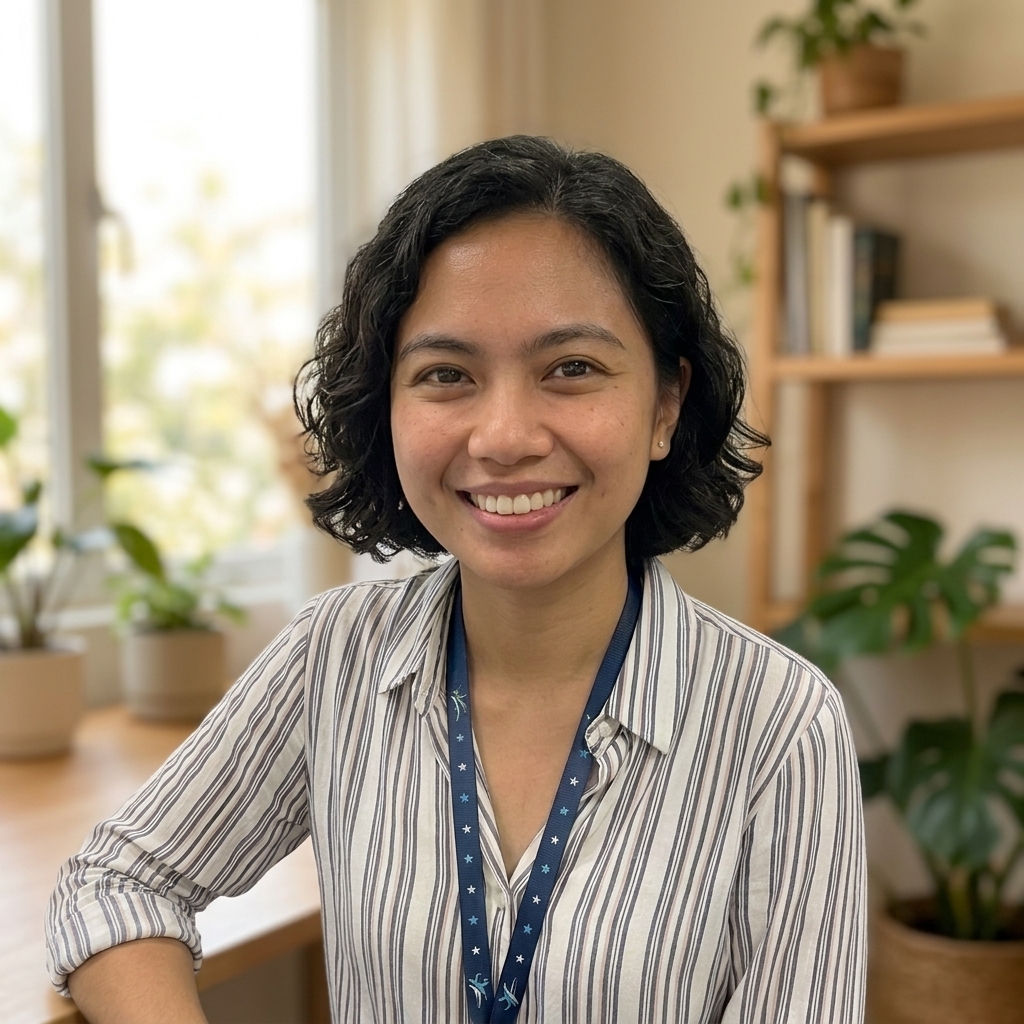
Sofia Reyes is a Content Writer and SEO Specialist at Digital Minds BPO, where she focuses on outsourcing-industry research and educational content for business decision-makers. Based in the Philippines, she has 7 years of experience writing B2B content across SEO, content strategy, and Generative Engine Optimization (GEO). Sofia partners with Digital Minds BPO’s operations and account management teams to translate 15+ years of frontline BPO experience into clear, sourced guides on call center, customer service, and back-office outsourcing. Her work supports prospects evaluating outsourcing decisions across the company’s three dedicated facilities, where the team delivers a 94% client retention rate for clients ranging from Fortune 500 enterprises to growth-stage businesses.